



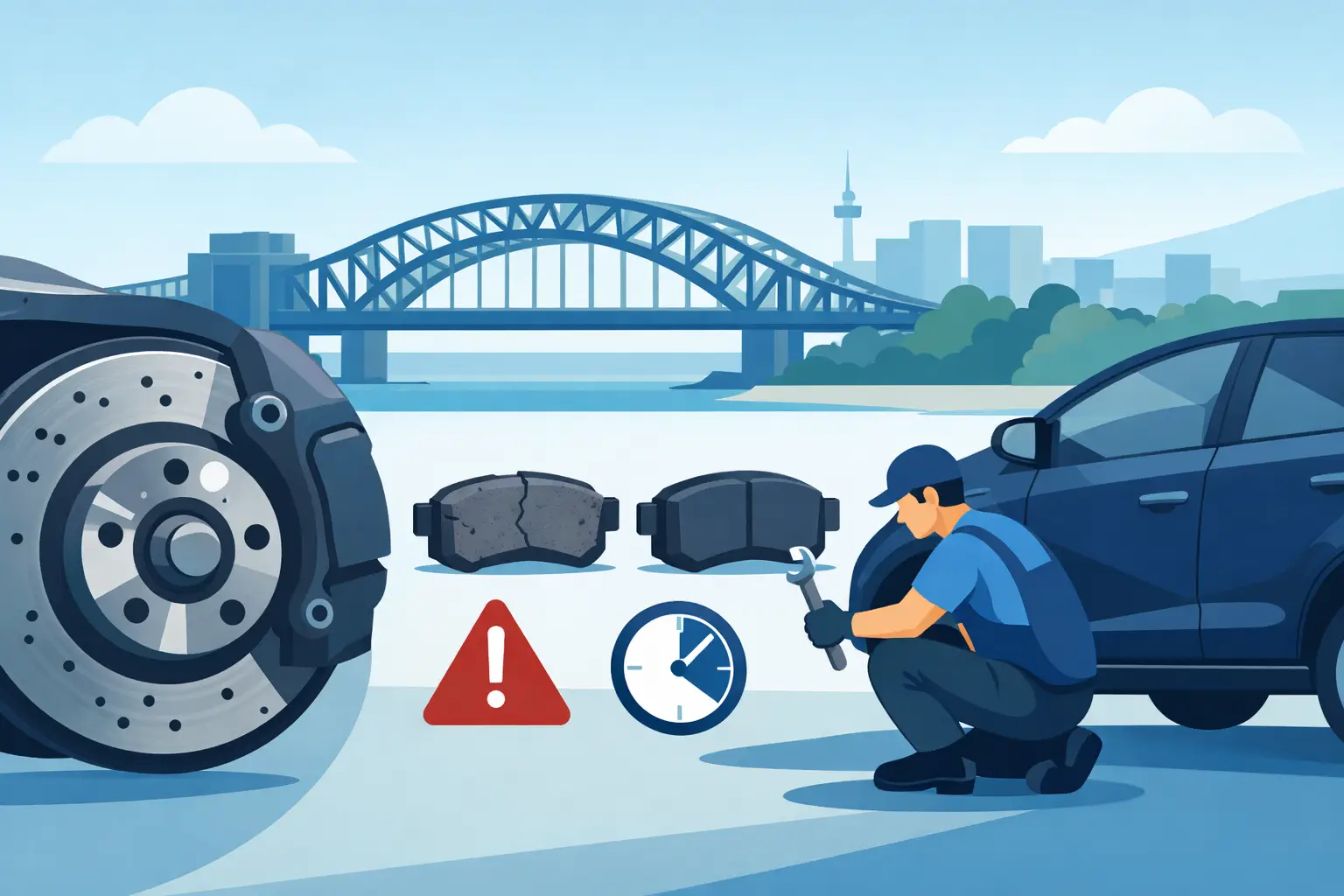
A brake pedal that feels different on the Red Hill Valley Parkway, a sharp squeal in downtown Hamilton traffic, or a steering wheel that shudders at a stoplight should never be ignored. Drivers often ask, “When should brake pads be replaced?” The honest answer is based on more than kilometres alone. Pad thickness, driving habits, vehicle weight, rotor condition, and the way the brakes feel all matter.
Brake pads are designed to wear down gradually as they create the friction needed to slow and stop your vehicle. Replacing them before they become dangerously thin protects your stopping performance and can prevent a more expensive brake repair involving damaged rotors, calipers, or brake hardware.
When Should Brake Pads Be Replaced?
For many passenger vehicles, front brake pads may last roughly 40,000 to 70,000 kilometres, while rear pads can sometimes last longer. That range is only a starting point, not a replacement schedule. A commuter who regularly travels in stop-and-go Hamilton traffic may wear through pads sooner than a driver who mostly covers open highway kilometres.
Heavier vehicles, work vans, vehicles that tow trailers, and cars carrying frequent passenger loads also place more demand on the braking system. Aggressive braking, steep hills, wet winter roads, and frequent short trips can all shorten pad life. Conversely, smooth driving and regular brake inspections can help pads last closer to the upper end of their expected range.
The most dependable approach is to have brake pad thickness checked during routine maintenance, such as an oil change, tire rotation, or seasonal inspection. Technicians generally recommend replacement when the friction material reaches about 3 millimetres. Waiting until there is almost no material left risks metal-on-metal contact, reduced braking control, and significant rotor damage.
Warning Signs Your Brake Pads Need Attention
A visual inspection is the best way to confirm pad wear, but your vehicle often provides useful warnings before braking performance becomes unsafe. Some signs point directly to worn pads, while others can indicate issues with rotors, calipers, brake fluid, or suspension components. A professional inspection identifies the cause rather than relying on guesswork.
Watch for these common signs:
- A high-pitched squeal when applying the brakes, especially at lower speeds. Many pads have a built-in wear indicator that creates this sound as the material becomes thin.
- A grinding or scraping noise. This can mean the pad material is gone and metal is contacting the rotor. Service is urgent at this stage.
- A brake pedal that feels soft, travels farther than usual, or requires more pressure to bring the vehicle to a stop.
- Vibration, pulsing, or shaking through the brake pedal or steering wheel during braking, which may be linked to uneven rotor wear.
- Your vehicle pulling to one side when braking. This can result from uneven pad wear, a sticking caliper, or another brake-system concern.
- A brake warning light or service message on the dashboard. Do not assume it is only a pad issue, but arrange an inspection promptly.
Not every sound means your pads are finished. Surface rust can develop on brake rotors after rain, snow, or a vehicle sitting overnight, particularly during Ontario winters. It may create a light scraping sound for the first few stops and then clear away. Persistent noise, vibration, or a change in brake response deserves professional attention.
Pad Thickness Matters More Than Noise Alone
Brake pads do not always squeal before they need replacement. Some pads wear quietly, and sound can also be affected by dust, moisture, hardware movement, or the specific pad material installed on the vehicle. That is why relying only on noise can leave you with little warning.
During a brake service inspection, a technician measures the remaining friction material, checks whether wear is even from side to side, and looks at the inner and outer pads. Inner pads can sometimes wear faster because of a sticking caliper or seized slide pin, even when the outer pad appears acceptable through the wheel. This is one reason a quick glance is not always enough.
The rotors should be inspected at the same time. Deep grooves, heat spots, corrosion, excessive rust around the braking surface, or a rotor below its minimum thickness may affect whether it can remain in service. In some cases, replacing pads without addressing worn rotors can lead to noise, vibration, uneven pad wear, and a shorter life for the new parts.
Should You Replace All Four Brake Pads at Once?
Brake pads should normally be replaced in axle pairs: both front pads together or both rear pads together. Replacing only one pad can create uneven braking and inconsistent performance. The front and rear axles, however, do not always need service at the same time.
Most vehicles use the front brakes more heavily because weight shifts forward during braking. It is common for front pads to wear out before rear pads. Some modern vehicles also have electronic brake-force distribution, regenerative braking, or specific rear brake designs that change the wear pattern. An inspection lets you replace what is needed without paying for parts that still have safe, useful life remaining.
If one pad is far more worn than the other on the same axle, it is worth finding out why. Uneven wear can point to a caliper that is not releasing properly, damaged hardware, or a brake hose concern. Replacing pads alone may temporarily quiet the symptom without correcting the source of the problem.
Why Delaying Brake Pad Replacement Costs More
Brake pads are a wear item. Rotors, calipers, and brake hardware are more costly components that should not be sacrificed by postponing basic service. Once the friction material is worn away, the metal backing plate can score the rotor. What may have been a straightforward pad replacement can then require new rotors and additional parts.
Delayed brake work also affects confidence behind the wheel. Longer stopping distances, inconsistent pedal feel, pulling, or grinding noises can make everyday driving stressful, especially when roads are wet, snowy, or crowded. For families, commuters, and local businesses that rely on their vehicles every day, dependable braking is not a detail to put off.
There is also a quality difference in how a brake job is completed. Correct parts selection, clean mounting surfaces, properly lubricated contact points, inspected caliper movement, and appropriate torque all contribute to quiet operation and even wear. Quality workmanship helps the full brake system perform as intended, rather than simply replacing a worn component and hoping for the best.
How Often Should You Have Brakes Inspected?
A practical rule is to have your brakes inspected at least once a year and whenever tires are rotated or seasonal service is performed. If you drive frequently in city traffic, tow, operate a commercial vehicle, or notice any change in braking behaviour, more frequent checks are sensible.
Ontario’s changing conditions add another reason to stay ahead of maintenance. Winter moisture and road salt can accelerate corrosion around rotors, calipers, and brake hardware. Spring is an excellent time to inspect the brakes after a demanding season, while fall service helps ensure the vehicle is ready for colder weather.
Keep in mind that brake pad replacement is not just about passing an inspection or eliminating a noise. It is about preserving predictable, controlled stops when traffic suddenly slows or road conditions change. A qualified technician can explain the remaining pad life, show you any uneven wear or rotor concerns, and help you make an informed decision without unnecessary work.
For Hamilton drivers who want a careful, high-standard assessment, ASC Auto Body & Sales provides professional brake service alongside complete mechanical and collision repair. Booking an inspection at the first sign of brake noise, vibration, or pedal changes gives you the best chance to protect your vehicle, your budget, and the people travelling with you.
Your brakes work hardest when you need them most. Treat a new sound or change in feel as an early prompt to have them checked, and you can keep small wear issues from becoming a larger repair.