



A vehicle door that needs to be lifted before it will latch, sits proud of the body panel, or suddenly takes extra force to close is not simply an annoyance. It can affect weather sealing, create wind noise, wear out the latch, and signal damage that deserves a closer inspection. Knowing when you can adjust a minor issue and when to bring in a collision repair professional is the safest way to fix door alignment without creating a larger problem.
What proper door alignment should look like
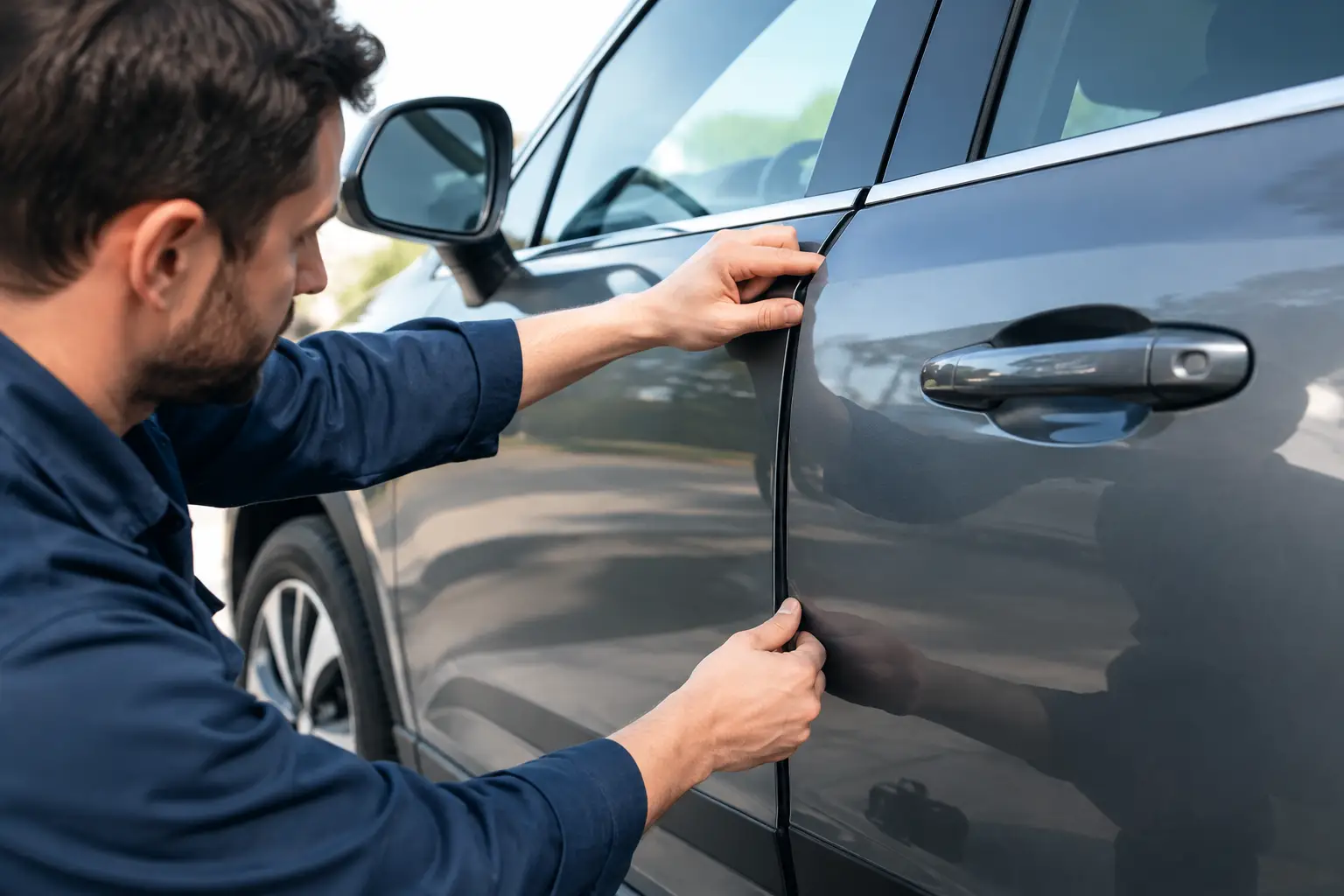
When a door is correctly aligned, the gaps around it should appear even and consistent. It should open smoothly, clear nearby trim and panels, close with a controlled push, and latch without slamming. The outside surface should sit flush with the fender, quarter panel, or adjacent door.
A small variation in panel gaps can be normal, particularly on an older vehicle. What is not normal is a sudden change. If your door began sagging after contact with another vehicle, a parking-lot impact, a pothole strike, or someone leaning heavily on an open door, the cause needs to be identified before any adjustment is made.
The door is part of a connected system: hinges, hinge mounting points, the striker, latch, weatherstripping, window frame, wiring, and the surrounding body structure all work together. Moving one component without checking the rest can make the door close better while leaving safety, sealing, or finish concerns unresolved.
Common signs you need to fix door alignment
The most obvious sign is a door that drops when opened. You may see the rear edge sitting lower than the body line, or feel the door rise as it meets the striker. This often points to hinge wear, loose hinge fasteners, or distortion around the hinge mounting area.
A door that closes but sits too far inward or outward can be related to the striker position. The striker is the metal loop mounted on the body that the door latch catches. If it has moved, the door may latch while remaining uneven with the adjacent panel. Excessive wind noise, a visible gap, or water entering the cabin can follow.
Other warning signs include chipped paint around a hinge, rubbing at the lower corner of the door, difficulty operating the window, a door-ajar warning that appears intermittently, or a latch that will not release or engage consistently. After a collision, these symptoms can indicate more than a simple adjustment.
Why collision damage changes the repair approach
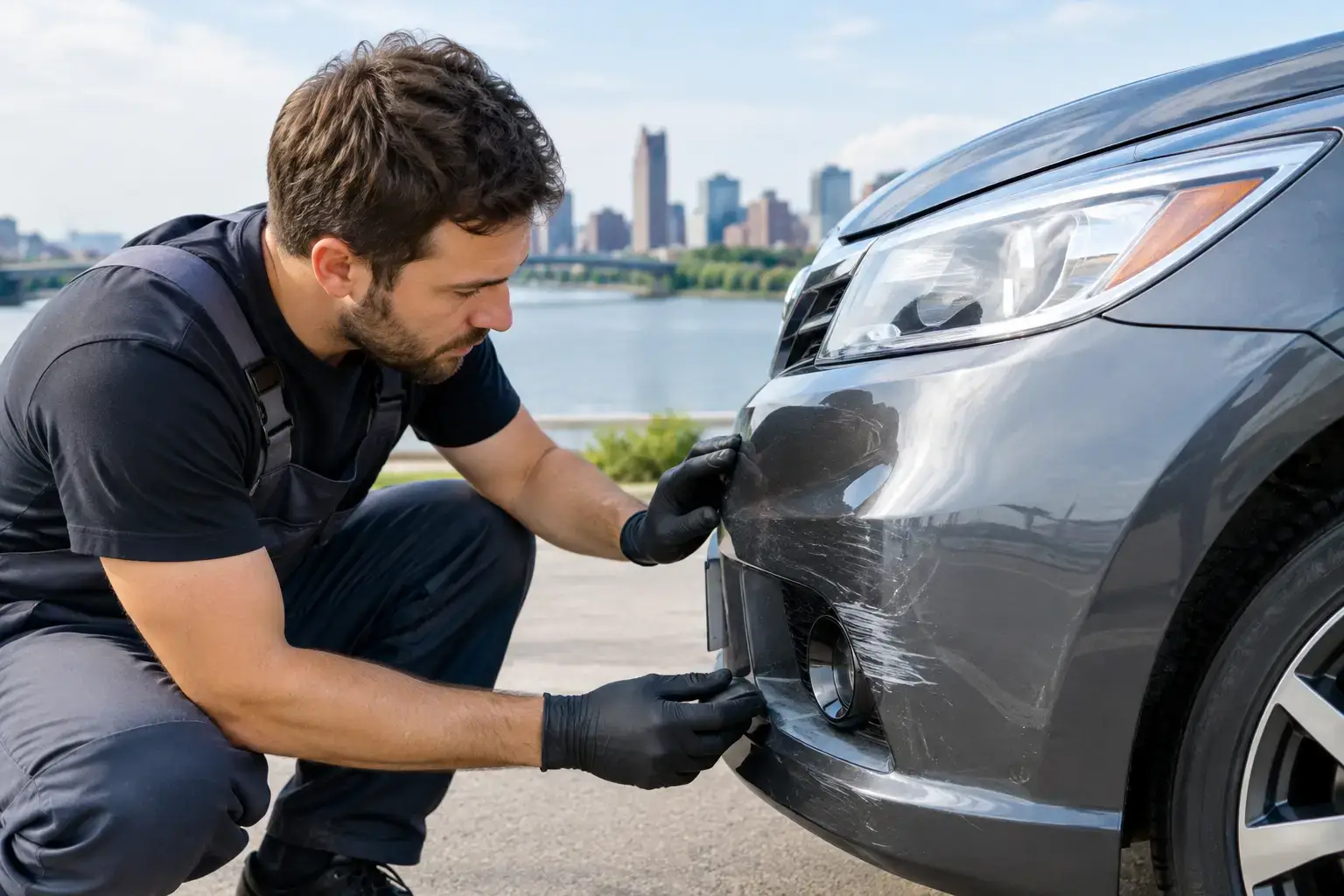
Even a low-speed impact can shift a fender, bend a door shell, alter the hinge area, or affect the vehicle’s pillar structure. Modern vehicles are built with carefully engineered crumple zones, reinforcements, sensors, and high-strength materials. A door that looks only slightly out of position may be reacting to structural movement behind the visible panel.
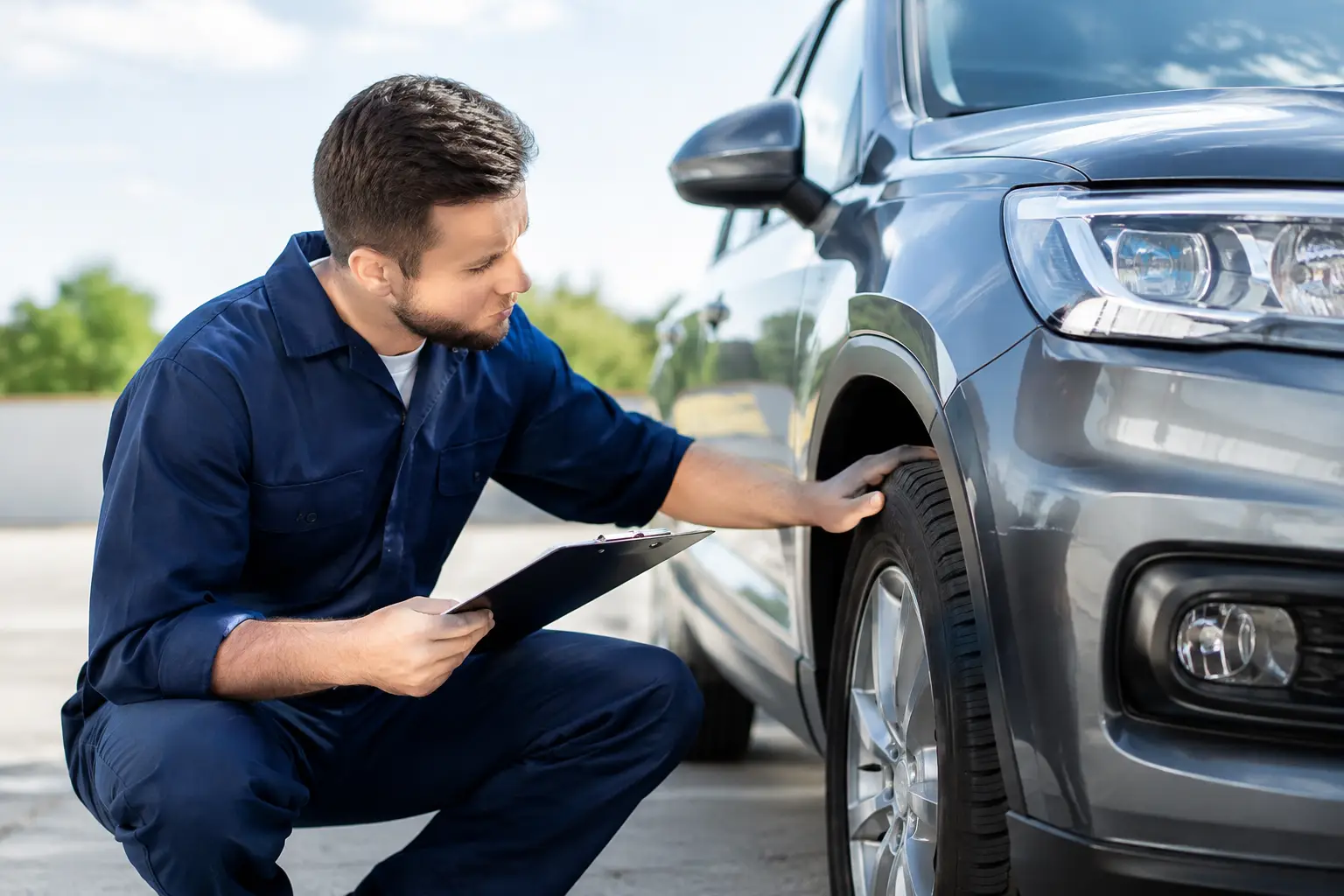
This is why a professional auto body inspection is especially valuable after an accident. Technicians can assess panel gaps, hinge condition, latch operation, paint damage, inner door components, and the body mounting points. If replacement is required, the repair should include proper fitting before refinishing so the door operates correctly and the finished appearance is worthy of the vehicle.
How to fix door alignment safely
Before making any adjustments, park on level ground and inspect the vehicle in good light. Compare the door gaps with the opposite side of the vehicle where possible. Look closely at the hinges, latch, striker, weatherstripping, and edges of nearby panels for fresh marks, cracks, loose hardware, or paint damage.
If the door is difficult to latch, do not repeatedly slam it. Slamming can damage the latch mechanism, worsen a bent edge, or crack the window glass. It can also hide the real problem until the door fails to close securely.
For a minor alignment issue, a technician may support the door at its correct height, check the hinge bolts for movement, and make precise adjustments in very small increments. Striker adjustment may also be required to ensure the latch engages properly and the outer surface sits flush. The exact sequence depends on what is causing the misalignment.
This is not a repair to rush with a socket set and guesswork. Door assemblies are heavy, hinges may be under load, and a few millimetres can make a major difference to closing effort and panel fit. Many modern doors also contain side-impact components, wiring harnesses, speakers, power window hardware, mirrors, and airbags. Incorrect handling can create electrical issues, damage trim, or compromise a repair.
When adjustment is not enough
Adjustment alone will not correct a worn hinge pin, a bent hinge, a distorted door frame, a damaged latch, or a shifted body opening. It also cannot restore a door that has been stretched, creased, or improperly repaired in the past.
A professional repair may involve replacing hinge components, repairing or replacing the door shell, correcting surrounding panel damage, or inspecting the vehicle’s structural alignment. Once the fit is right, refinishing work may be needed to protect exposed metal and restore a clean, like-new appearance.
There is also a practical trade-off to consider. A quick adjustment may improve a door temporarily, but if collision damage is the underlying cause, it can lead to recurring latch problems, water leaks, premature weatherstrip wear, and reduced resale appeal. Repairing the source of the issue is typically the more reliable and cost-effective choice over time.
Checks to make after a door alignment repair
A correctly repaired door should be tested more than once. Open and close it from both inside and outside, then check whether it latches smoothly without force. Confirm that the gaps are even, the door surface is flush with neighbouring panels, and the weatherstrip contacts consistently around the opening.
The window should travel freely, power locks should operate as expected, and the interior door handle should release the latch without sticking. On a road test, listen for wind noise and watch for door-ajar warnings. Following a collision repair, technicians should also confirm that related components, trim, seals, and sensors are functioning as they should.
If you notice water on the sill after rain or a car wash, report it promptly. Water intrusion can affect carpeting, wiring, and interior materials long before the full extent of the problem is visible.
Professional door alignment in Hamilton
For Hamilton drivers, door alignment is often part of a wider repair conversation. A door may have been damaged in a collision, caught by high wind, scraped against an obstacle, or affected by corrosion and age. The right repair begins with determining whether the problem lies in the door itself, its hardware, or the vehicle body around it.
At ASC Auto Body & Sales, experienced technicians assess both appearance and operation, because a properly aligned door should look right, seal properly, and close with confidence. From collision repair and dent correction to refinishing and mechanical concerns, precision matters at every stage of restoring your vehicle.
If a door no longer closes as it should, arrange an inspection before a minor fit issue turns into a damaged latch, worn seal, or avoidable safety concern. A careful diagnosis now can help keep every trip quieter, drier, and more dependable.