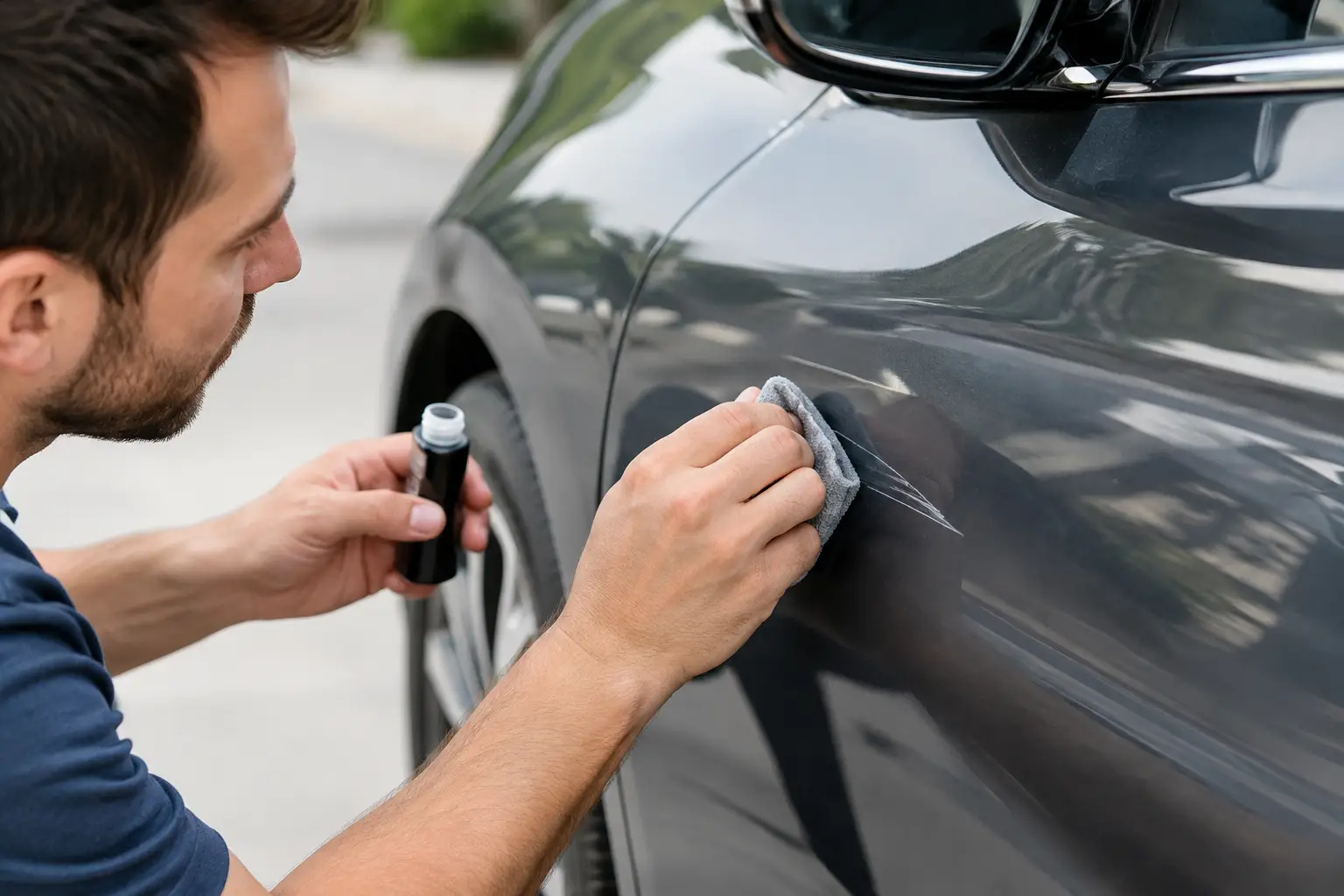




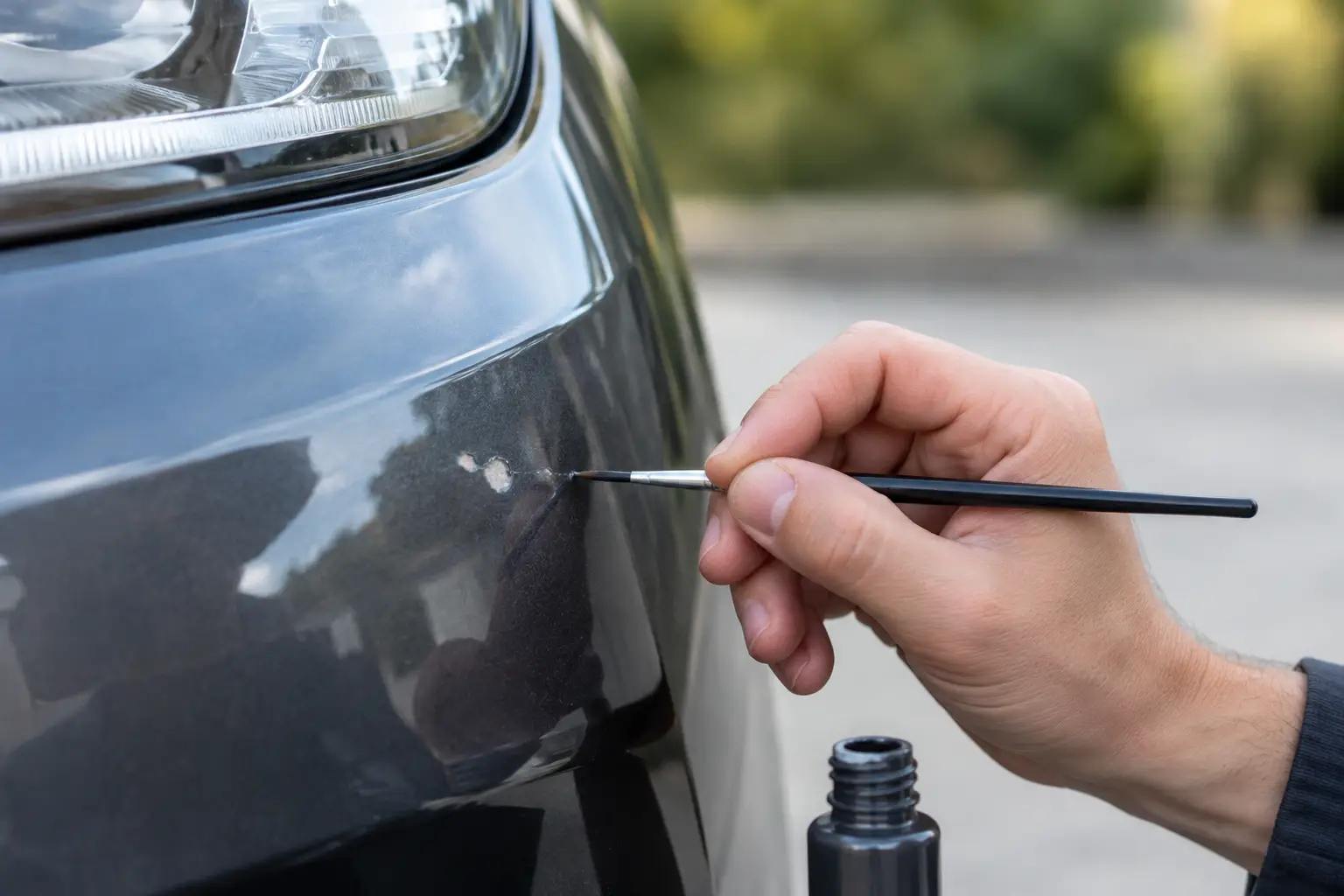
A stone chip on the hood can look minor on the drive home, but Hamilton winters, wet roads, road salt, and daily driving can turn that small break in the finish into a larger repair. If you are asking, should I repair paint chips, the practical answer is usually yes – especially when bare metal, primer, or rust is visible.
Not every chip requires a full repaint of the vehicle. The right solution depends on the chip’s depth, location, number, and age. Repairing it early is often a straightforward way to protect your vehicle’s appearance, preserve its value, and avoid corrosion spreading beneath the surrounding paint.
Why Paint Chips Need Attention
Your vehicle’s paint is more than a cosmetic layer. Modern automotive finishes are built in stages: metal or plastic substrate, primer, colour coat, and clear coat. Together, those layers provide protection against moisture, sunlight, road debris, salt, and contaminants.
When a chip breaks through the clear coat and colour coat, water can reach the layers underneath. On a metal panel, that can begin the oxidation process that creates rust. Once rust takes hold, it does not simply sit where the original chip appeared. It can creep under nearby paint, causing bubbling, lifting, and wider surface damage.
This is particularly relevant in Ontario. Slush, brine, salt, freezing temperatures, and repeated thaw cycles place extra stress on exposed areas. Chips on the hood, roof edge, rocker panels, wheel arches, doors, and lower bumper areas tend to face the harshest conditions.
A chip on a plastic bumper will not rust in the same way as one on a steel panel, but it can still allow the finish to peel, fade, or deteriorate. It may also make an otherwise well-kept vehicle look neglected.
Should I Repair Paint Chips Right Away?
The urgency depends on what is exposed. A very shallow mark that only affects the clear coat is less concerning than a chip that has gone down to primer or bare metal. Still, shallow damage should be monitored, because the edge of damaged clear coat can gradually worsen.
Repair paint chips promptly when you see a dark, silver, brown, or rust-coloured spot beneath the paint. You should also arrange an assessment when the chip is large, has sharp lifting edges, sits along a panel seam, or is located in an area that regularly collects salt and moisture.
Timing matters most when rust has already started. A small rust spot may be repairable with localized preparation, corrosion treatment, priming, colour matching, and refinishing. Leaving it through one or two more winters can mean sanding and repairing a much wider section of the panel. In more severe cases, corrosion can compromise the metal itself and require panel repair or replacement.
The good news is that early paint chip repair is generally less involved than correcting peeling paint or advanced corrosion later. A professional assessment clarifies whether a precise touch-up is suitable or whether the panel needs a more complete refinishing process for a lasting result.
When a Touch-Up Repair Makes Sense
For a single, clean chip with no rust, a carefully completed touch-up can be an effective option. This is often suitable for small stone chips on a hood, fender, or door where the surrounding paint remains secure and the vehicle owner’s main priority is protection.
A touch-up should be approached as a repair, not simply as adding colour to a spot. The area needs to be thoroughly cleaned and dried. Any loose paint or early corrosion must be addressed before primer and colour are applied. Using the correct factory paint code matters, but even an exact paint formula can look different if it is applied too heavily, not levelled properly, or cured in unsuitable conditions.
DIY touch-up products can be useful for tiny, low-visibility chips if you are comfortable working carefully and understand the finish may not be invisible. They are less ideal for chips that have rust, multiple adjacent impacts, damage near body lines, or a visible location such as the leading edge of the hood.
There is a trade-off: a do-it-yourself repair may reduce immediate cost, but an uneven blob of paint, trapped contamination, or untreated rust can make a later professional repair more difficult. For newer vehicles, enthusiast-owned vehicles, and vehicles you plan to sell, professional colour matching and refinishing are often the better investment.
Signs the Damage Needs Professional Refinishing
Paint chips are not always isolated. A close inspection may reveal cracking, spreading clear coat failure, a shallow dent beneath the chip, or corrosion around the edges. These conditions call for more than a quick touch-up.
Professional refinishing is worth considering when:
- Rust is visible or paint is bubbling around the chip.
- Several chips cover the same area of the hood, roof, rocker panel, or wheel arch.
- The damaged area includes a dent, crease, scrape, or collision-related impact.
- The chip is on a highly visible panel and appearance matters to you.
- The vehicle has metallic, pearl, tri-coat, matte, or custom paint that needs careful colour matching.
- Paint is lifting around the chip or peeling from a wider section of the panel.
A proper repair may involve removing damaged material, treating corrosion, preparing the surface, applying primer, and refinishing the area with matched colour and clear coat. Depending on the location and paint type, the technician may blend colour into an adjacent area to create a consistent appearance rather than leaving a visible patch.
This level of workmanship is especially valuable on late-model vehicles. Factory paint has depth and gloss, and a good repair should protect the panel while restoring a finish that looks at home beside the original paint.
Do Paint Chips Affect Resale Value?
One or two tiny stone chips will not usually determine a vehicle’s resale value. Buyers understand that road use leaves normal wear, particularly on front-facing panels. However, visible rust, peeling paint, and numerous neglected chips can change how a buyer, dealer, or appraiser views the vehicle.
Cosmetic condition helps tell the story of how a vehicle has been maintained. A clean exterior with repaired damage suggests careful ownership. Rust spots and damaged paint can raise concerns about hidden corrosion, previous collision damage, or deferred maintenance, even when those concerns are not justified.
For leased vehicles, it is also wise to deal with noticeable paint damage before inspection. Repairing a chip early may be more economical than facing a charge for panel refinishing at lease return.
Prevention After the Repair
Paint chips cannot be eliminated entirely, but a few habits can reduce their frequency. Leave extra distance behind gravel trucks and winter maintenance vehicles. Avoid following closely on freshly treated roads, and wash road salt from the lower body, wheel arches, and rocker panels regularly during winter.
A quality wax, sealant, or ceramic coating can make the paint easier to clean and provide an added sacrificial layer, though none of these products makes paint immune to stone impacts. For vehicles that spend significant time on highways, paint protection film on high-impact areas such as the front bumper, hood edge, mirrors, and rocker panels can offer stronger physical protection.
It also helps to inspect the vehicle when washing it. Fresh chips are easier to address before dirt, moisture, and corrosion settle into the damaged area.
Get the Right Repair for Your Vehicle
A paint chip may be small, but the best repair is not always the same for every vehicle. An experienced body shop can determine whether the damage needs a precise touch-up, corrosion treatment, localized refinishing, or repair to a larger affected area.
At ASC Auto Body & Sales, our Hamilton team brings more than 20 years of collision repair and refinishing experience to every assessment. We focus on the details that protect your vehicle’s appearance and dependable condition, from surface preparation to colour matching and final finish quality.
If you have noticed bare metal, rust, bubbling paint, or a growing cluster of stone chips, arranging an assessment now can help keep a minor issue from becoming a larger body repair. A timely repair gives your vehicle the protection it needs for the road ahead.