

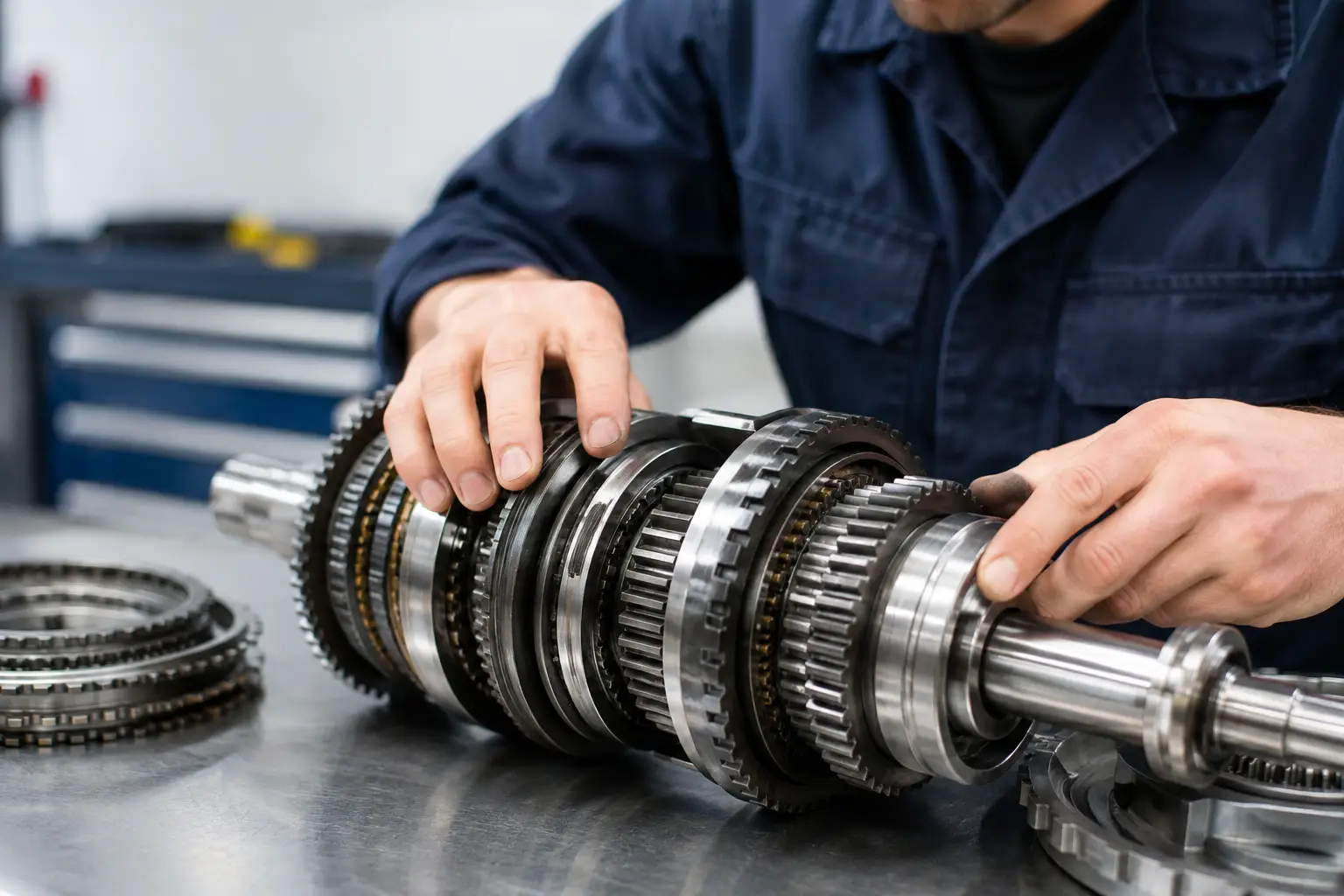
A transmission that slips can make an otherwise dependable vehicle feel unpredictable. You may notice the engine revving higher without a matching increase in speed, a delayed response when shifting into Drive or Reverse, or a sudden loss of pull while accelerating. Understanding what causes transmission slipping helps Hamilton drivers act early, before a manageable repair turns into major internal damage or leaves the vehicle unsafe to drive.
Transmission slipping is not one single fault. Automatic, CVT, dual-clutch, and manual transmissions transfer power in different ways, so the underlying cause depends on the vehicle and its maintenance history. Still, most cases come down to fluid condition, worn internal components, hydraulic pressure problems, overheating, or an electrical control issue.
What Causes Transmission Slipping in Automatic Cars?
An automatic transmission relies on clean fluid, correct hydraulic pressure, friction materials, sensors, and computer controls to select and hold each gear. If one part of that system is not doing its job, the transmission may hesitate, flare between gears, shudder, or slip under load.
Low, old, or incorrect transmission fluid
Transmission fluid does far more than lubricate moving components. It helps control hydraulic pressure, cools the transmission, and allows clutch packs to apply firmly. When fluid is low, the pump may draw air and struggle to maintain the pressure required for a clean shift. This can feel like a delayed engagement when selecting a gear or an engine that revs before the vehicle moves properly.
Low fluid often points to a leak. Transmission pan gaskets, cooler lines, axle seals, and case seals can all allow fluid to escape over time. A reddish or brownish stain where the vehicle is parked deserves attention, particularly if slipping has started.
Fluid can also become worn or contaminated. Heat breaks down its protective properties, while internal wear can leave debris in the fluid. Using the wrong specification can create problems as well. Modern vehicles are designed around specific fluid formulations, and a universal substitute is not always appropriate. A professional inspection can confirm the fluid level, condition, and correct type for the transmission in your vehicle.
Worn clutch packs, bands, or other internal parts
Inside many automatic transmissions are clutch packs that lock different gearsets together. These clutches use friction material, much like brake components, and they wear over time. If the material is worn, glazed from heat, or unable to receive enough pressure, the clutch can slip instead of holding securely.
Some older automatic transmissions also use bands to hold components in place. A worn, damaged, or improperly adjusted band can cause slipping in certain gears. Internal seals can harden with age, allowing pressure to leak away before a clutch fully applies.
This type of wear is more likely on high-kilometre vehicles, vehicles that tow regularly, or vehicles that have gone too long between recommended services. It does not automatically mean the entire transmission needs replacement. The right repair depends on which components have failed and whether damage is limited or widespread.
Faulty solenoids, valve body issues, and sensor problems
Modern transmissions use electronic solenoids to direct fluid through the valve body. The valve body is a precise network of passages and valves that controls where hydraulic pressure goes during each shift. A sticking valve, failing solenoid, or blocked passage can cause harsh shifts, delayed shifts, slipping, or a vehicle that enters a reduced-power mode.
Sensors and wiring matter too. The transmission control module uses information about vehicle speed, engine load, throttle position, and transmission input and output speeds to decide when to shift. If a sensor sends inaccurate data, the transmission may choose the wrong gear, delay a shift, or fail to apply a clutch as intended.
Because these problems can produce symptoms similar to mechanical wear, diagnostic testing is essential. A warning light may be on, but not every transmission fault triggers one immediately. Reading fault codes is only the starting point. Technicians also need to verify live data, fluid condition, operating temperatures, and road-test behaviour.
Overheating and heavy use
Heat is one of the most common contributors to transmission damage. Stop-and-go traffic, frequent short trips, summer temperatures, towing, carrying heavy loads, and climbing grades all increase transmission temperature. If the cooling system or transmission cooler is restricted or damaged, fluid can overheat and lose its ability to protect internal parts.
Overheating may cause a burning smell, dark fluid, shuddering, or slipping once the vehicle has been driven for a while. Letting the transmission cool may temporarily reduce the symptom, but it does not correct the reason it overheated. Continued driving can quickly damage clutches, seals, and valve body components.
Torque converter or CVT-specific concerns
The torque converter transfers engine power into many conventional automatic transmissions. Problems with its internal clutch or bearings can feel like slipping, shuddering, or vibration at cruising speed. In some cases, the vehicle may struggle to move efficiently even though the engine revs normally.
A continuously variable transmission, or CVT, does not shift through fixed gears in the same way as a traditional automatic. It uses a belt or chain and variable pulleys to change ratios. A CVT may feel as though it is slipping when it surges, whines, shudders, or allows engine speed to rise without smooth acceleration. CVTs require their own specified fluid and diagnostic approach, so it is especially important not to assume a conventional automatic transmission repair applies.
Manual transmissions can slip for a different reason: a worn clutch disc, weak pressure plate, contaminated clutch surface, or hydraulic clutch issue. The symptom is often most noticeable under hard acceleration or when climbing a hill. The engine speed rises, but road speed does not increase at the same rate.
Warning Signs That Should Not Be Ignored
A slipping transmission does not always start with a dramatic failure. Early warning signs may appear only during acceleration, when the vehicle is cold, or after it reaches operating temperature. Pay attention to a delay before the vehicle moves after selecting Drive or Reverse, unexpected upshifts or downshifts, surging, shuddering, whining, burning odours, or a change in the colour of the transmission fluid.
A check engine light or transmission warning message should also be assessed promptly. While some drivers continue driving because the vehicle still moves, slipping creates heat and friction. Those conditions can turn a minor control or fluid issue into more extensive internal wear.
If the vehicle suddenly loses power on a busy road, cannot maintain speed, or refuses to engage a gear, pull over safely and arrange for inspection rather than forcing it to continue. Driving with severe slipping can be unsafe, particularly in traffic, on hills, or while towing.
How a Professional Diagnosis Protects Your Vehicle
Transmission repair should begin with diagnosis, not guesswork. A qualified technician can inspect for leaks, verify the fluid level and specification, scan for stored fault codes, test electrical connections, and assess how the transmission performs during a controlled road test. In some cases, pressure testing or further inspection is needed to pinpoint an internal fault.
That process matters because similar symptoms can come from different systems. An engine misfire, failing wheel-speed sensor, worn engine mount, drivetrain issue, or software concern can sometimes be mistaken for transmission slipping. Replacing parts without confirming the cause can add cost without resolving the problem.
The repair may be as straightforward as addressing a leak, replacing a solenoid, completing the appropriate fluid service, or correcting a control issue. More serious wear may require valve body repair, torque converter service, clutch replacement, or transmission rebuilding or replacement. The best choice depends on the vehicle’s condition, mileage, parts availability, and how long the slipping has been present.
What to Do When You Notice Slipping
Avoid hard acceleration, unnecessary towing, and repeated attempts to force the transmission into gear. Do not add fluid unless you know the correct specification and proper checking procedure for your vehicle. Many newer transmissions do not have a conventional dipstick, and an incorrect level can cause further problems.
Book a professional inspection as soon as possible and describe exactly when the symptom occurs: cold starts, highway driving, hills, after extended traffic, or only in a particular gear. Those details help narrow the diagnosis and support a more efficient repair.
For Hamilton drivers, ASC Auto Body & Sales brings more than two decades of practical vehicle repair experience to transmission concerns and broader mechanical service. A timely inspection gives you the clearest path back to smooth shifting, dependable performance, and confidence every time you pull onto the road.