



A car that will not start at the end of a long Hamilton workday is more than an inconvenience. If you are asking, “why does car battery drain?” the answer may be as simple as an interior light left on, or it may point to a battery, alternator, wiring, or electrical-system concern that deserves professional attention.
Your battery has one essential job: it supplies the power needed to start the engine and supports electrical components when the engine is off. Once the engine is running, the alternator should recharge the battery and power the vehicle’s electrical systems. When that balance is disrupted, a drained battery can leave you stranded without much warning.
Why Does a Car Battery Drain Overnight?
An overnight drain usually means electricity is being used while the vehicle is parked, the battery can no longer hold enough charge, or the charging system did not replenish it during the last drive. The cause is not always visible from the driver’s seat.
A light or accessory remains on
A dome light, vanity mirror light, glove-box lamp, trunk light, or door that does not fully latch can drain a battery over several hours. Modern vehicles also have screens, modules, keyless-entry systems, chargers, dash cameras, and aftermarket accessories that may continue to draw power after the ignition is switched off.
A phone charger alone is rarely the entire problem, but an accessory that is poorly installed or does not shut down properly can be. Check for interior lights after dark and make sure all doors, the trunk, and the hood are fully closed. If the issue returns after those checks, a technician can measure the vehicle’s key-off electrical draw rather than guessing.
A parasitic draw is using power in the background
Every newer vehicle has a small normal parasitic draw. The clock, security system, memory settings, and computer modules need a limited amount of power when the car is off. Normally, these systems enter sleep mode after a short period.
A fault can prevent that from happening. A control module may stay awake, a relay may stick, or an aftermarket remote starter, alarm, stereo, dash cam, or tracking device may use more power than it should. These problems can be frustrating because the car may start normally after being boosted, then fail again the next morning. A proper parasitic-draw test identifies which circuit is responsible without unnecessary parts replacement.
The battery is old or internally damaged
Car batteries do not last forever. In Ontario, many last roughly three to five years, although driving habits, vehicle type, summer heat, and winter cold can shorten or extend that range. As a battery ages, its ability to store and deliver power falls.
A weak battery may still start a vehicle after a longer drive or on a mild day. Then, when temperatures drop overnight, it may not have enough reserve to turn the engine over. Batteries can also develop internal faults that prevent them from holding a charge even when the alternator is working correctly. A battery test gives a clearer answer than relying on its age alone.
A Battery Can Drain While You Drive, Too
If the battery warning light comes on while the engine is running, the concern is often not the battery itself. It may mean the charging system is not keeping up with the vehicle’s electrical demand.
Alternator or drive-belt trouble
The alternator converts engine power into electricity to recharge the battery while you drive. A failing alternator may charge inconsistently or not at all. A worn, loose, or damaged serpentine belt can also prevent the alternator from operating as it should.
Common clues include headlights that dim or flicker, power windows that move slowly, warning lights on the dash, a burning-rubber smell from a slipping belt, or a vehicle that starts with a boost but stalls soon afterward. Do not assume a new battery will solve these symptoms. If the alternator is not charging properly, even a new battery will be drained.
Loose or corroded battery connections
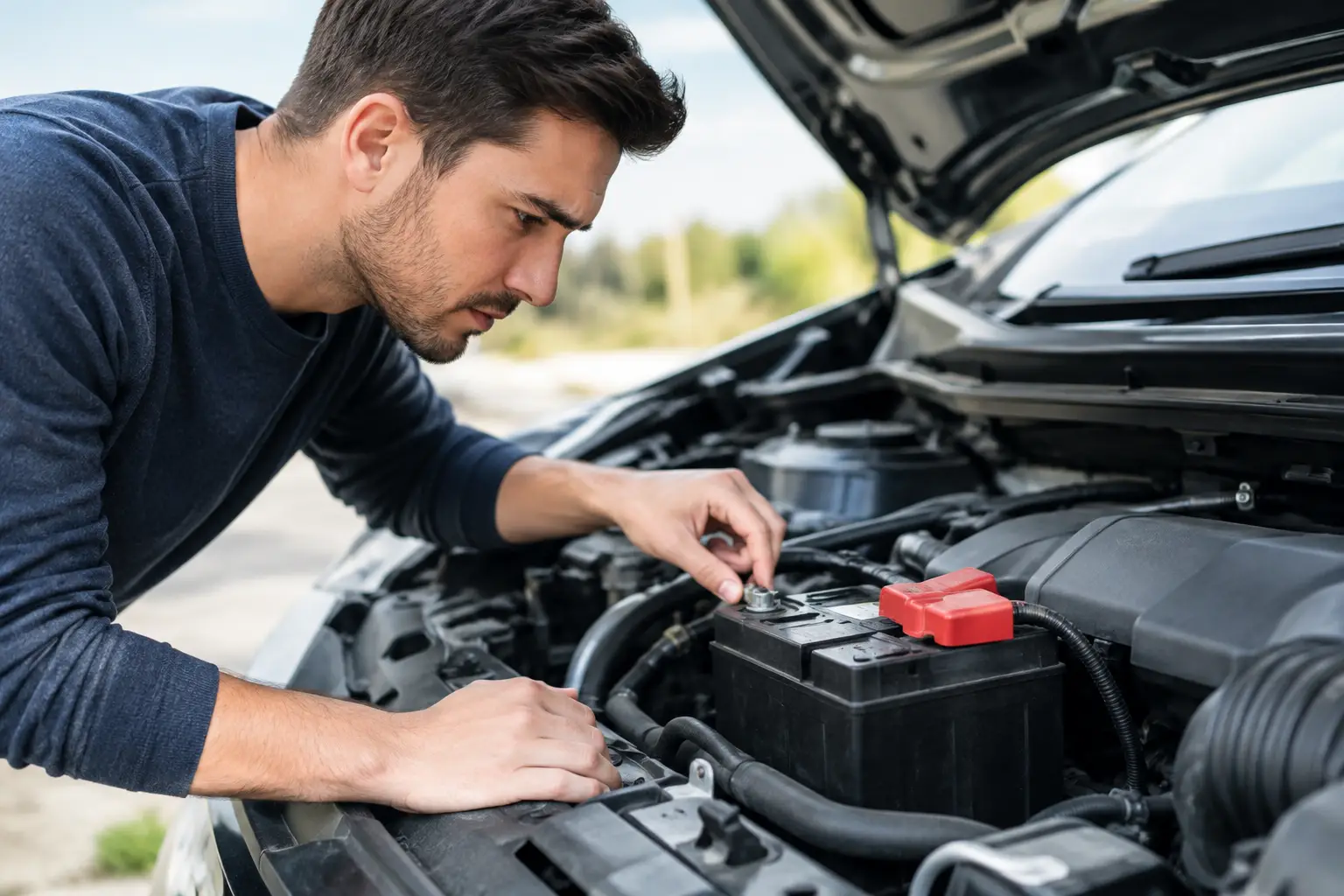
Battery terminals need a clean, secure connection to carry current. White, blue, or green corrosion around the terminals can interfere with charging and starting. A loose cable can create an intermittent no-start condition that feels like a dead battery, especially over bumps or in damp weather.
Corrosion is a practical maintenance issue, but it can also be a sign of a battery nearing the end of its service life or a charging concern. A technician can inspect the battery terminals, ground connections, cables, and charging voltage together. This matters because replacing one part without checking the full system can leave the original problem unresolved.
Short trips never restore the charge
Starting an engine takes a substantial burst of energy. If most trips are only a few minutes long, particularly in winter with the heater, rear defroster, lights, heated seats, and blower motor running, the alternator may not have enough time to restore what the battery used to start the vehicle.
This does not mean every short-trip driver needs a new battery. It does mean battery condition matters more. A regular longer drive can help, but it will not repair an aged battery or a failing alternator. Drivers who use a vehicle infrequently may also benefit from having the battery and charging system checked before the colder months arrive.
Cold Weather Makes a Weak Battery Obvious
Hamilton winters are hard on batteries. Cold temperatures slow the chemical reaction inside the battery, reducing the power available to start the engine. At the same time, cold engine oil is thicker, so the starter needs more power to crank the engine.
That is why a battery that seemed acceptable in autumn can struggle during the first cold snap. Frost, snow, and freezing temperatures may expose an existing weakness, but they are not usually the original cause. Treat a repeat winter no-start as a reason to test the battery rather than simply boosting it again.
Signs Your Vehicle Needs More Than a Boost
A boost may get you moving, but it does not explain why the battery went flat. Pay attention to patterns. Repeated boosting, a slow crank, clicking when turning the key or pressing the start button, dim lights, electrical features behaving unpredictably, or a battery warning light all justify a diagnostic inspection.
A battery that is swollen, leaking, cracked, or producing a strong sulphur or rotten-egg smell should be handled with care. Do not keep trying to start the vehicle. Battery damage and charging-system faults can create safety concerns and should be assessed promptly.
Practical Checks Before Booking Service
There are a few sensible checks drivers can make without taking risks or disconnecting electrical components:
- Look for lights left on in the cabin, trunk, glove box, and cargo area.
- Remove unnecessary chargers and unplug accessory devices when the vehicle is parked.
- Check that battery terminals appear secure and free from heavy corrosion, without touching damaged cables.
- Note when the problem happens: after sitting overnight, only in cold weather, after short trips, or while driving.
Those details help narrow down the diagnosis. Avoid repeatedly boosting a vehicle and assuming the issue is solved. Repeated deep discharge can shorten battery life, and a failing alternator or electrical fault can become more disruptive over time.
Professional Battery and Charging-System Diagnosis
The right repair depends on the test results. A professional inspection can test battery capacity, starting performance, alternator output, voltage drop across cables, and parasitic draw when the vehicle is off. This step-by-step approach prevents replacing a battery when the real fault is a poor connection, failing alternator, damaged wiring, or accessory installation.
Electrical concerns can sometimes follow collision damage, especially when wiring, lamps, sensors, or body panels have been affected. They can also appear after accessory work or as vehicles age. At ASC Auto Body & Sales, experienced technicians can assess the mechanical and electrical side of the problem, helping Hamilton drivers make a confident decision about the repair their vehicle actually needs.
If your vehicle has started slowly, needed a boost, or shown a battery warning light, arrange an inspection before the next no-start leaves you late for work or stranded in the cold. A timely diagnosis protects reliable starting, safe operation, and the confidence that your vehicle is ready when you need it.