



A missed oil change rarely feels urgent until a warning light appears on the QEW, a brake pedal feels soft in traffic, or a vehicle refuses to start during a Hamilton cold snap. A preventive maintenance schedule gives your vehicle the attention it needs before small wear items become expensive repairs, unexpected downtime, or safety concerns.
For Ontario drivers, maintenance is not a one-time checklist. Road salt, potholes, stop-and-go commuting, summer heat, and changing temperatures all place demands on tires, brakes, fluids, batteries, paint, and mechanical systems. The right schedule protects reliable performance while helping you plan service around your vehicle, mileage, driving habits, and manufacturer recommendations.
Why Preventive Maintenance Matters
Preventive maintenance means inspecting, servicing, and replacing parts based on time, mileage, condition, or seasonal needs rather than waiting for a failure. It is practical vehicle care: change fluids before they lose their protective qualities, replace worn brakes before stopping distance is affected, and identify a weak battery before winter exposes it.
This approach can also protect resale value. A vehicle with documented oil changes, tire service, brake inspections, and timely repairs shows that it has been cared for properly. That matters whether you plan to keep your vehicle for years, sell it privately, trade it in, or rely on it every day for work.
There is a financial benefit, but the real priority is safety. Tires with poor tread, worn brake components, damaged wiper blades, or neglected suspension parts can affect how confidently a vehicle handles rain, snow, rough roads, and emergency stops. Regular professional inspections help identify these concerns when there is still time to address them properly.
Build a Preventive Maintenance Schedule Around Your Vehicle
Your owner’s manual is the starting point. Manufacturers set service intervals according to the vehicle’s engine, fluids, drivetrain, and components. However, those intervals are not always identical for every driver. A vehicle used mainly for short trips, frequent idling, towing, delivery work, or heavy city driving may need attention sooner than one used for steady highway travel.
A good maintenance plan uses both mileage and time. Oil, for example, should be changed at the recommended interval even if you have not driven many kilometres. Moisture, temperature changes, and short-trip operation can affect fluids and engine condition over time. The same principle applies to brake fluid, coolant, tires, and battery health.
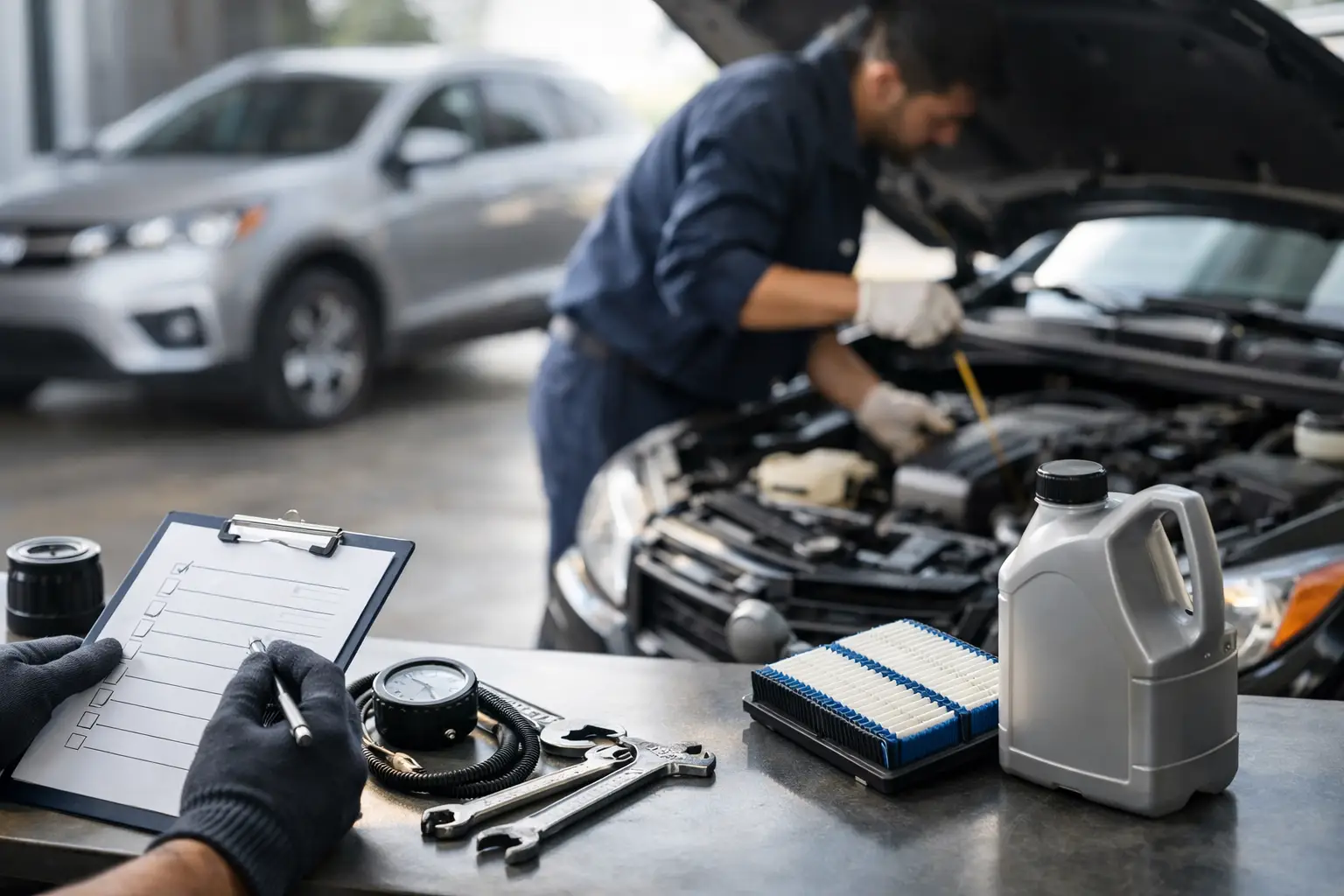
Keep a simple record of each service appointment, including the date, odometer reading, work completed, and any inspection notes. This makes it easier to see what is due next and gives your technician useful context if a concern develops.
Every month: quick owner checks
A few minutes in the driveway can prevent a surprising number of issues. Check tire pressure when tires are cold and compare it with the pressure listed on the driver’s door placard. Look for obvious tire damage, uneven tread wear, fluid spots beneath the vehicle, dim exterior lights, and wiper blades that streak or split.
Pay attention while driving as well. New vibrations, pulling during braking, squealing, warning lights, unusual exhaust smoke, delayed shifting, or a change in steering response deserve prompt attention. A dashboard warning light is not a maintenance reminder to postpone. It is your vehicle telling you that a system needs to be checked.
Every 5,000 to 8,000 kilometres: oil and basic inspection
The precise oil-change interval depends on your vehicle and the oil specified by its manufacturer. Many modern vehicles can travel farther between services, while severe-use driving may shorten the interval. Rather than relying on an old rule of thumb, follow the manufacturer’s guidance and ask a qualified technician what makes sense for how you drive.
An oil service is also a sensible time for a broader inspection. Tire condition and pressure, fluid levels, belts, hoses, lights, brakes, filters, and visible leaks can all be reviewed. Catching a minor seep, cracked hose, or uneven tire pattern early can prevent further damage and help preserve fuel efficiency.
Every 10,000 to 12,000 kilometres: tire rotation and brake review
Tire rotation helps distribute wear more evenly across all four tires. Front and rear tires often wear differently, especially on front-wheel-drive vehicles and vehicles used primarily in city traffic. Rotating tires at regular intervals can extend tire life and support predictable handling.
This is also a good interval for brake inspection. Brake pads, rotors, calipers, lines, and fluid should be assessed based on condition, not simply replaced because a certain number of kilometres has passed. Some drivers wear pads quickly through traffic and frequent braking, while highway drivers may get much longer life. Professional measurement helps you make a decision based on the actual condition of your brakes.
Seasonal service: prepare for Hamilton weather
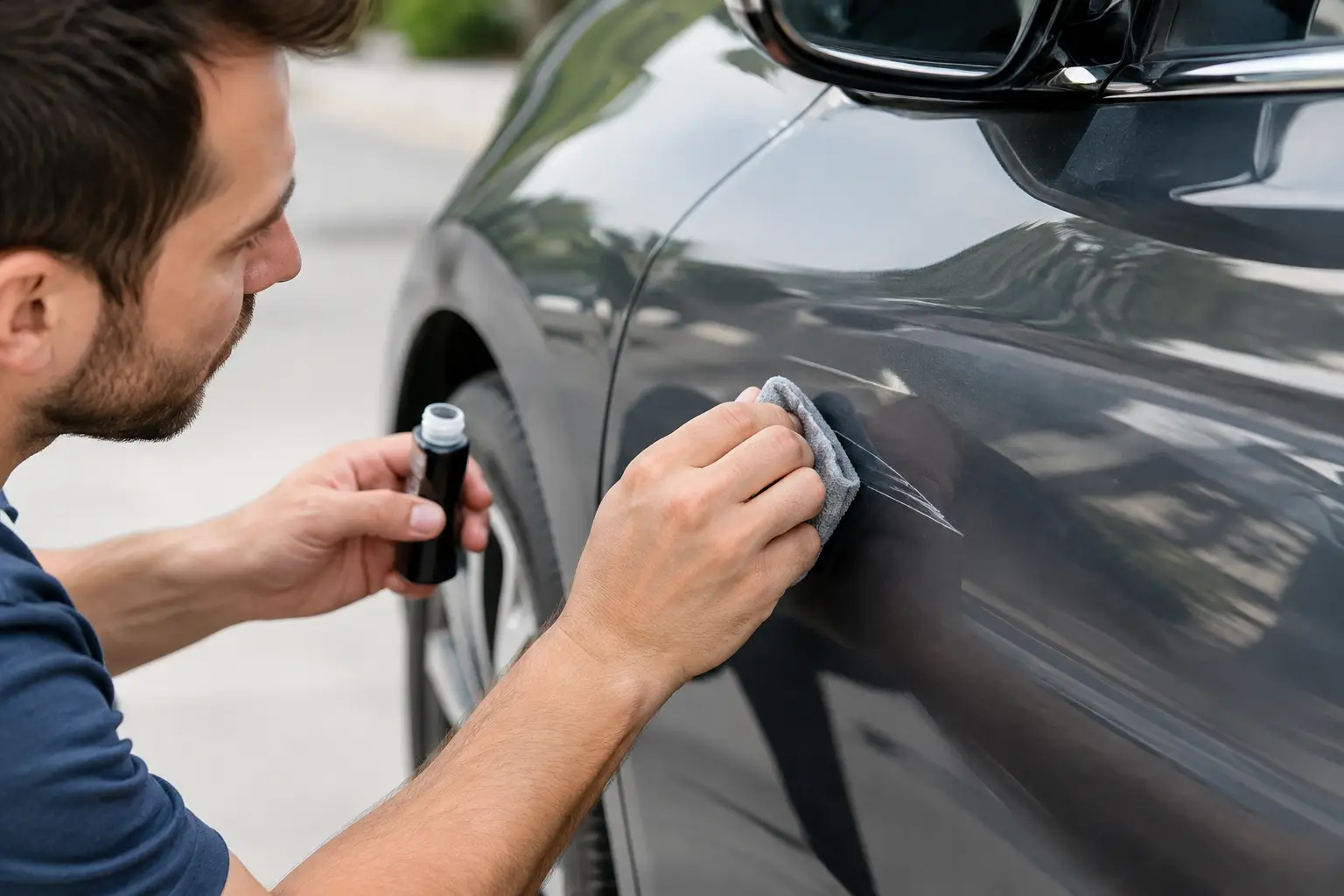
Spring is an excellent time to inspect the effects of winter. Salt, slush, and potholes can contribute to corrosion, paint damage, wheel alignment concerns, and suspension wear. A thorough wash, including the underbody where appropriate, helps remove residue that can accelerate corrosion. Small chips and scratches should be repaired before moisture reaches bare metal.
Before summer, confirm that your air conditioning is cooling properly, inspect coolant condition, and make sure tires are properly inflated. Overheating is more likely when a cooling system has low coolant, a failing component, or an unseen leak.
Fall is the time to prepare for colder conditions. Test the battery, inspect wiper blades, top up approved windshield washer fluid, verify that all lights are working, and assess winter tire readiness. In Ontario, winter tires provide meaningful extra traction in cold temperatures and snowy conditions. They should be installed before the first difficult weather event, not after it.
Maintenance Items That Need Longer Intervals
Not every service belongs on the same frequent cycle. Engine air filters, cabin air filters, spark plugs, transmission fluid, brake fluid, coolant, differential fluid, and timing components all have different replacement or inspection requirements. The correct interval depends on the vehicle, its age, and operating conditions.
Transmission service is a good example of why generic advice can be risky. Some manufacturers specify particular fluids and service procedures, while others use fluid marketed for longer service life. If you notice harsh shifts, slipping, delayed engagement, or transmission warnings, do not wait for a routine interval. A diagnostic inspection can identify whether the issue is fluid-related, electronic, mechanical, or something else.
Battery replacement also depends on condition rather than the calendar alone. Canadian winters are hard on batteries, and a battery may appear fine until the temperature drops. Testing its starting capacity before winter is far more useful than guessing based on age.
Do Not Separate Mechanical Care From Vehicle Appearance
Preventive maintenance also includes looking after the parts of your vehicle that protect its finish and structure. Stone chips, scratches, damaged trim, cracked glass, and loose panels may appear cosmetic at first, but they can allow water, salt, and debris to create larger problems over time.
A windshield crack can spread quickly with temperature changes. Paint damage can become corrosion. A bumper or panel that no longer fits correctly after a minor impact may need to be inspected for hidden damage. Addressing these issues early helps maintain both like-new appearance and dependable road readiness.
For drivers who have recently experienced a collision, it is especially wise to follow up on wheel alignment, tire wear, steering response, sensors, lights, and panel fitment. A proper repair should restore more than appearances. It should restore safe operation and confidence behind the wheel.
When to Book Professional Service Sooner
A schedule is valuable, but it should never override clear warning signs. Book an inspection promptly if you notice brake noise, a burning smell, engine overheating, leaks, vibration, steering pull, reduced power, a flashing check-engine light, damaged glass, or collision-related damage.
It is also smart to book service before a long road trip, the start of winter, or a busy work season for a business vehicle. A pre-trip inspection can uncover worn tires, low fluids, weak batteries, and brake concerns before they interrupt your plans.
At ASC Auto Body & Sales, our experienced Hamilton technicians can help you build a practical maintenance plan around your vehicle’s needs, from oil changes and tire rotations to brake service, diagnostics, refinishing, and collision repair. The goal is straightforward: precision work that keeps your vehicle safe, efficient, presentable, and ready for the road ahead.
The best time to arrange maintenance is while your vehicle is still driving well. A planned appointment gives you more control, more confidence, and a better chance of keeping a small concern from becoming the repair you never saw coming.