


Your brake pads make dozens of small decisions for you every time traffic slows on the Lincoln Alexander Parkway, a child crosses near your neighbourhood, or rain starts falling on a Hamilton commute. The ceramic versus organic brake pads decision affects more than the invoice. It can change brake noise, wheel dust, pedal feel, rotor wear and how well your vehicle suits the way you actually drive.
Neither material is automatically the right answer for every car. A quiet commuter vehicle, a work van carrying equipment, and an enthusiast vehicle driven hard on weekends place very different demands on the braking system. The best choice starts with the vehicle manufacturer’s requirements, then considers your driving habits, budget and the overall condition of the brake system.
Ceramic Versus Organic Brake Pads: The Core Difference
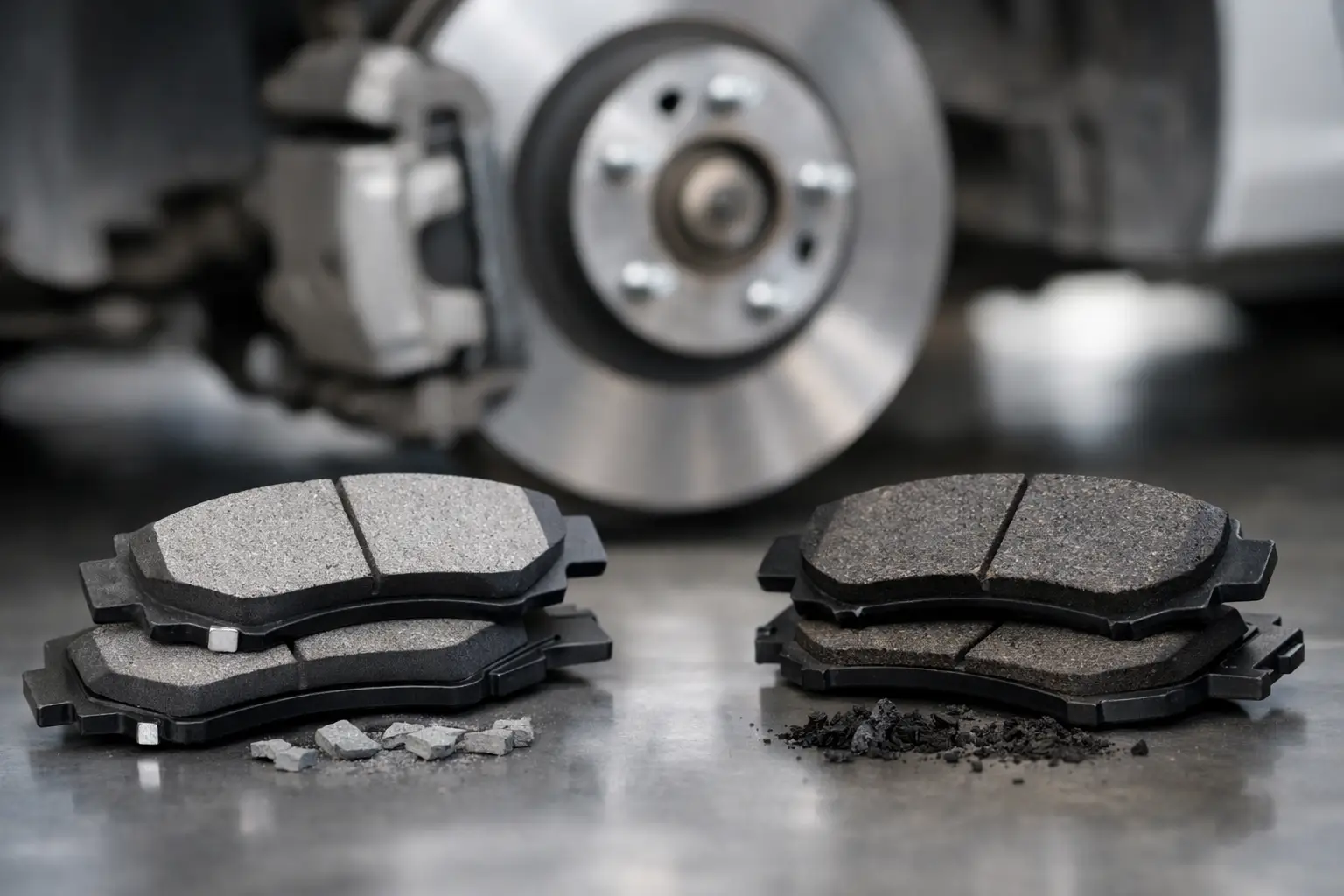
Brake pads create friction against the brake rotors to slow or stop your vehicle. The friction material is bonded to a metal backing plate, but its composition varies. Organic and ceramic pads are built for the same essential job, yet they go about it differently.
Organic pads, often called non-asbestos organic or NAO pads, are made from a blend of fibres and fillers such as rubber, glass, carbon, resins and other materials. They are generally softer than ceramic pads and have long been a common choice for everyday passenger vehicles.
Ceramic pads use dense ceramic fibres and bonding agents, often with small amounts of copper-free metallic material to help manage heat and friction. They are engineered to be stable, clean and quiet under normal road use. Their higher material cost is usually reflected in the price of the brake job.
The pad material matters, but it is not the only factor. Pad shape, hardware quality, rotor condition, caliper movement and proper installation all affect braking performance. Even premium pads cannot compensate for seized caliper slide pins, worn rotors or old brake fluid.
When Organic Brake Pads Make Sense
Organic brake pads are a practical option for many drivers who use a compact car, sedan or small crossover for regular city and highway travel. Because the material is relatively soft, organic pads often provide a smooth, progressive pedal feel at everyday speeds. They tend to work well from a cold start, which is useful during ordinary Ontario driving.
They are also usually the lower-cost option. If your vehicle is older, driven modestly, and not used for towing or hauling, a quality organic pad can provide dependable braking without adding unnecessary expense to routine maintenance.
The trade-off is wear. Softer material can wear faster, particularly in stop-and-go traffic, on steep routes, or when the vehicle carries extra weight. Organic pads can also create more visible dark brake dust on alloy wheels. This dust is normal, but frequent buildup can be frustrating for drivers who want their wheels to stay clean between washes.
Noise is another point worth understanding. Organic pads are often quiet, but no pad material guarantees silence. A squeal may come from worn hardware, glazing, contamination, incorrect shims or a rotor issue rather than from the pad itself. A proper brake inspection is more useful than choosing a pad based on noise claims alone.
Organic pads are often a good fit for
Organic pads may suit a light daily driver, an older vehicle where value matters, or a driver who covers moderate kilometres with no towing or demanding mountain driving. They are also reasonable when the braking system is otherwise in good condition and the vehicle manufacturer allows that pad type.
Why Drivers Choose Ceramic Brake Pads
Ceramic pads are especially appealing to drivers who value cleaner wheels and consistent, refined braking during normal commuting. They typically produce lighter-coloured, less noticeable dust than organic pads. For vehicles with bright alloy wheels or an owner who takes pride in a like-new appearance, that difference can be meaningful.
Ceramic material also manages typical braking temperatures well. During routine urban and highway use, many ceramic pads retain a consistent response as they warm up. They are commonly known for quiet operation because the material is formulated to dampen vibration that can lead to brake noise.
Their longer service life can offset some of the initial cost, although there is no universal mileage promise. Brake pad life depends on driving conditions, vehicle weight, traffic, brake design and driver habits. A vehicle used mostly on open highways may go much farther on a set of pads than one driven through daily downtown traffic.
Ceramic pads are not always the premium choice in every situation. Their higher purchase price may not make sense for a vehicle nearing the end of its service life or one used very lightly. Some heavy-duty applications, performance vehicles and tow vehicles may call for a different friction compound designed specifically for high heat and load. The correct pad is the one that meets the vehicle’s intended use, not simply the one with the highest price tag.
Ceramic pads are often a good fit for
Ceramic pads can be an excellent match for newer daily drivers, family vehicles and commuter cars where quiet braking, low visible dust and steady road performance are priorities. They are particularly popular with owners who want quality brake service that supports both safe operation and a well-kept finish.
Cost, Rotor Wear and Real-World Performance
Comparing pad prices alone can be misleading. A brake service should account for the complete condition of the system: pads, rotors, calipers, hardware, brake fluid and the lines that carry hydraulic pressure. Installing new pads on deeply grooved, warped or rust-damaged rotors can lead to vibration, reduced contact and premature wear.
Organic pads are generally less expensive upfront. Ceramic pads generally cost more, but may last longer and leave less dust behind. Rotor wear is more complicated than the idea that one pad type is always gentler. Rotor life depends on the specific pad formulation, rotor quality, heat cycles and whether the pads are bedded in correctly. A technician should measure rotor thickness and inspect the surface before recommending resurfacing or replacement.
For Canadian drivers, corrosion also deserves attention. Road salt, moisture and long periods without driving can cause caliper hardware and slide pins to seize. When a caliper does not release correctly, one pad may wear much faster than the other, the vehicle may pull while braking, and excessive heat can damage the rotor. Changing pad material will not solve that mechanical problem.
Do Not Choose Pads by Noise or Dust Alone
Low dust and quiet operation are valuable, but safety comes first. Your vehicle’s brake system was engineered around specific components and performance requirements. A quality replacement pad should match the correct fitment and meet the needed braking standard for your vehicle.
Pay attention to changes that suggest brake service is due. A high-pitched wear indicator, grinding, steering-wheel vibration under braking, a soft pedal, increased stopping distance or a vehicle pulling to one side should be inspected promptly. Grinding is particularly urgent because it can mean the pad friction material is gone and metal is contacting the rotor.
It is also wise to be cautious with very inexpensive, unbranded pads. They may fit physically while delivering inconsistent friction, excess noise or shorter service life. Brake components are not the place to accept uncertainty. Reliable parts and precise installation protect the people in your vehicle and everyone sharing the road.
How to Make the Right Brake Pad Choice
Start with the kind of driving your vehicle does most often. If it is a commuter car that spends its days in Hamilton traffic, ceramic pads may be worth the added investment for clean, quiet, dependable operation. If it is a lightly driven older car and cost is the main concern, quality organic pads may provide the sensible balance you need.
Then consider load and heat. Regular towing, commercial use, heavy cargo or spirited driving can require a pad compound beyond either standard organic or ceramic options. A professional inspection can identify whether your rotors, calipers and hardware are ready for new pads or whether the job needs additional work to restore full braking performance.
At ASC Auto Body & Sales, brake service is approached as a safety repair, not a quick parts swap. An experienced technician can assess wear patterns, check the complete system and recommend components that suit your vehicle and your driving needs. The right pads should leave you with confidence at every stop, whether you are heading across Hamilton for work or loading the family in for the weekend.