



A bumper crack can look like a small cosmetic issue after a parking-lot bump, winter curb strike, or minor collision. But deciding how to repair bumper cracks properly takes more than filling the visible split and adding paint. Modern bumpers are designed to manage low-speed impacts, support sensors and lights, and protect components behind the bumper cover. A repair that looks good but fails too soon, interferes with a sensor, or leaves damaged mounting points is not a complete repair.
For Hamilton drivers, the right answer depends on where the crack is, how far it extends, what material the bumper is made from, and whether the impact affected anything beneath the surface. Here is what to look for before choosing repair or replacement.
Not Every Bumper Crack Has the Same Risk
Most visible bumpers are plastic bumper covers, usually made from flexible materials such as polypropylene or thermoplastic olefin. Behind that cover may be an impact absorber, reinforcement bar, brackets, wiring, parking sensors, radar equipment, and lower trim pieces. The crack you can see is only one part of the assessment.
A short crack in the middle of a bumper cover, with no missing material and no distortion around it, may be a strong candidate for professional repair. A crack near a mounting tab, grille opening, sensor location, or sharp body line needs closer attention. Those areas carry more stress, and a repair must preserve fit, flexibility, and the proper operation of the vehicle’s equipment.
Cracks at the corners of the bumper are also common. They can happen when a vehicle catches a post, snowbank, curb, or another vehicle during a tight turn. Because corners flex more than flat sections, a quick surface repair may reopen if the underlying plastic has not been properly reinforced.
When Repairing Bumper Cracks Makes Sense
Professional bumper repair is often the practical choice when the damage is limited to the cover and the plastic remains structurally sound enough to restore. It can retain the original factory-fit bumper cover, reduce unnecessary parts replacement, and return the vehicle to a clean, like-new appearance.
Repair is generally worth considering when the crack is relatively contained, all pieces are present, the bumper has not been badly stretched or torn, and the mounting points remain secure. The technician will also check that there is no hidden damage to the absorber, reinforcement bar, fender liners, headlight brackets, or clips.
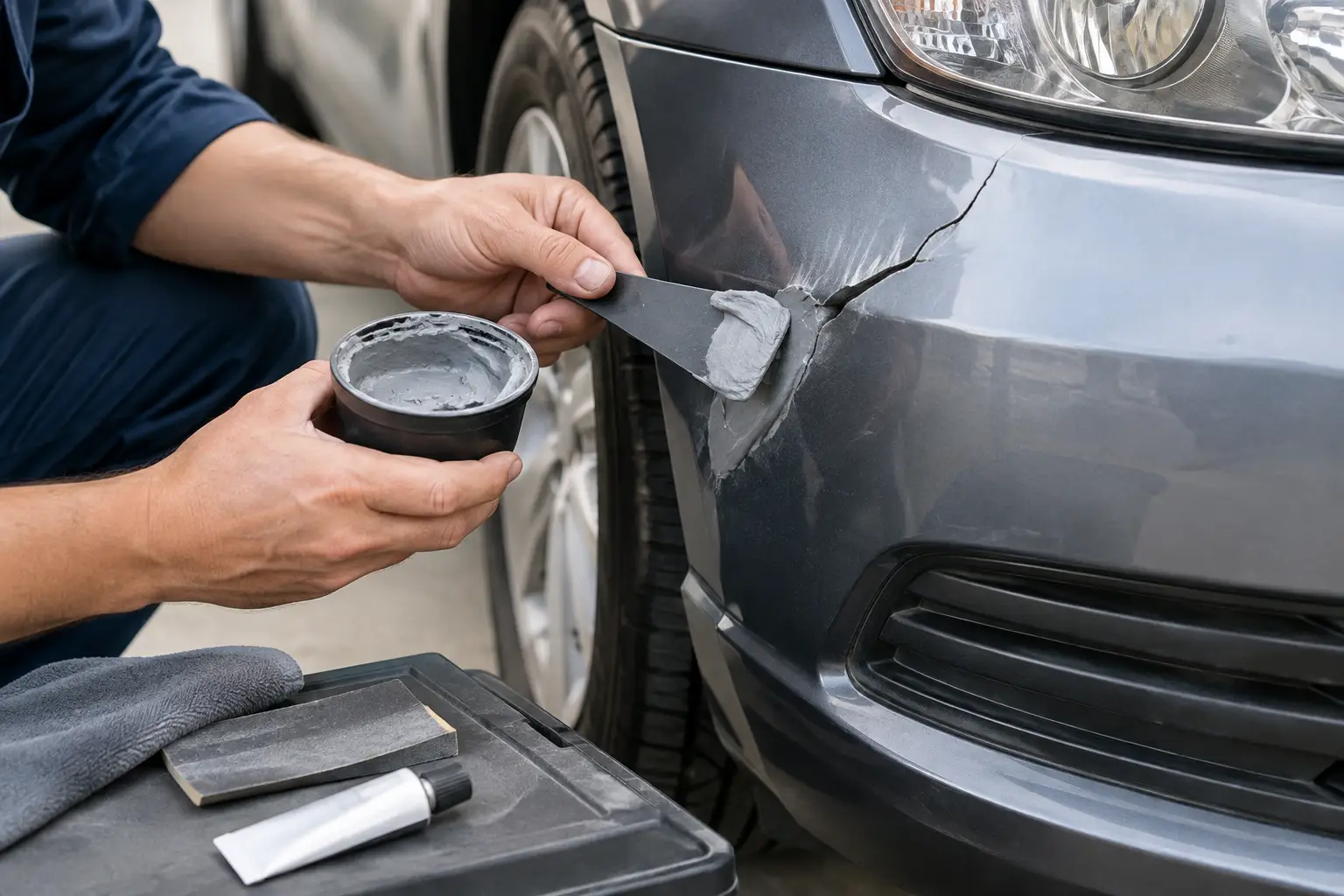
The quality of the process matters. Plastic does not behave like steel. It expands, flexes, and responds differently to heat and adhesives. A lasting repair may involve stopping the crack from spreading, preparing the damaged area from both sides, plastic welding or using the correct repair material, reinforcing the back of the cover where appropriate, reshaping the surface, and refinishing it to match the vehicle.
A repaired bumper should not simply hide the damage. It should regain the strength and flexibility needed for normal driving, car washes, temperature changes, and everyday use.
The paint finish is part of the repair
Once the plastic repair is complete, the bumper needs careful refinishing. Modern paint colours can include metallic flakes, pearl effects, tinted clear coats, or subtle variations that become obvious under daylight. The bumper also sits beside painted fenders, hood edges, lights, and trim, so colour accuracy matters.
A professional refinishing process includes proper cleaning, adhesion preparation, primer as needed, colour application, clear coat, and curing. Depending on the location and colour, blending into adjacent panels may be recommended for the most consistent result. This is especially relevant for whites, silvers, greys, reds, and many newer factory colours that change appearance in different light.
When Bumper Replacement Is the Better Decision
There are situations where replacement is safer, more durable, or more economical than trying to repair the original cover. A severely split bumper, a cover with missing sections, widespread cracking, or damage around several mounting tabs may not provide a reliable long-term result.
Replacement may also be the better route if the bumper cover is distorted beyond proper reshaping or if the impact damaged the components behind it. A technician should inspect the impact bar and absorber after a more significant collision, even when the exterior damage appears limited. The bumper cover may spring back while hidden parts remain bent, crushed, or misaligned.
Vehicles equipped with advanced driver-assistance systems require additional care. Parking sensors, blind-spot monitoring, radar modules, cameras, and adaptive cruise-control hardware may be located in or near the bumper. A cracked cover can affect sensor placement, while a collision can require diagnostic checks or calibration after repair or replacement.
This does not mean every cracked bumper requires a new one. It means the decision should be based on a complete inspection rather than appearance alone.
Why DIY Repairs Often Fall Short
DIY repair kits can be tempting when a crack appears small. Some can improve a minor blemish temporarily, but they often fall short where durability and finish quality matter. Household adhesives may not bond correctly to bumper plastic, particularly if the material was not identified and prepared properly. Ordinary fillers can become brittle and crack again as the bumper flexes.
Paint is another challenge. Aerosol colour may look close in the garage and noticeably different outside. Texture, gloss level, metallic orientation, and clear-coat durability all affect the final appearance. Overspray and poorly masked edges can also reduce the vehicle’s overall finish quality.
There is also the question of hidden damage. A do-it-yourself repair cannot confirm the condition of brackets, liners, sensors, retainers, and energy-absorbing components without a proper inspection. For a commuter vehicle, family SUV, work truck, or fleet vehicle, dependable road readiness is worth more than a temporary patch.
What a Professional Bumper Repair Process Looks Like
A proper assessment begins with inspecting the bumper cover inside and out. The damaged area is examined for crack length, plastic type, warping, broken tabs, missing material, and signs that the impact travelled into nearby panels or components. If the vehicle has sensors or camera systems, their location and condition are checked before work begins.
The repair itself is chosen according to the damage. For a repairable crack, the technician may stabilize the area, prepare a groove along the crack, use a compatible plastic-welding or bonding procedure, and reinforce the rear side when required. The front surface is then shaped and finished so the repair blends naturally into the bumper’s original contours.
Next comes refinishing. The bumper is prepared for paint, matched to the vehicle’s existing colour, and refinished under controlled conditions. Reassembly is not just a matter of clipping the cover back on. Panel gaps, fasteners, grille fit, lower trim, lights, sensors, and splash shields all need to sit correctly.
If diagnostics or calibration are required, those steps should be completed before the vehicle is returned. The goal is a bumper that looks right, fits right, and supports safe, confident operation.
Insurance, Collision Claims, and Repair Choices
If the crack resulted from a collision, take clear photos before cleaning or attempting any repair. Note when and where the damage happened, and report the claim according to your insurer’s requirements. Even minor exterior damage can reveal additional issues after the bumper cover is removed.
An insurance estimate may identify whether repair or replacement is appropriate, but the final scope can change once hidden damage is visible. That is normal in collision work. A reputable repair facility explains what was found, why it matters, and what is needed to return the vehicle to proper condition.
For vehicles used in business, this attention is particularly valuable. Downtime, appearance, safe operation, and dependable equipment all affect the daily work of a local company. Choosing the lowest apparent repair cost can be expensive if the bumper fails early or related damage is missed.
Do Not Wait for a Small Crack to Spread
Bumper cracks tend to grow with vibration, temperature swings, road debris, and repeated flexing. Ontario winters can make that worse as plastic becomes less forgiving in cold conditions. Water and road salt can also work behind loose edges, affecting clips, brackets, and nearby hardware.
If the bumper is loose, rubbing on a tire, interfering with a light, or showing warning messages related to sensors, arrange an inspection promptly. These are signs that the issue goes beyond appearance.
For more than 20 years, ASC Auto Body & Sales has helped Hamilton drivers make sensible repair decisions after dents, scratches, and collisions. A careful inspection can show whether your bumper can be repaired with precision or whether replacement will provide the better long-term result. The best next step is simple: have the damage assessed before a small crack becomes a larger repair.