



A low-speed parking-lot bump can leave only a scuff on the surface, while a similar impact can crack the material behind it, loosen a mounting point, or affect a sensor you rely on every day. Knowing how to assess bumper damage gives you a clearer picture of what happened before you drive away, open an insurance claim, or decide whether professional collision repair is required.
Modern bumpers are designed to absorb and manage impact energy. That means the visible cover is only one part of the system. A careful initial check can help you document the condition of your vehicle, but it cannot replace a proper inspection when safety-related components may be affected.
Start by Checking Whether It Is Safe to Drive
Before looking closely at the paint or the dent, make sure the vehicle is safe to move. If the accident involved another vehicle, a fixed object, or anyone who may be injured, follow Ontario reporting requirements and contact the appropriate authorities or collision reporting centre when needed.
Then look for immediate signs that the bumper or another part of the vehicle could create a hazard. Do not continue driving if the bumper is hanging loose, dragging on the ground, interfering with a tire, or blocking a light, reflector, licence plate, or camera. A loose panel can detach at speed, and a damaged front bumper can expose components that need protection.
Pay attention to warning messages on the dashboard. Parking sensor, collision-warning, airbag, or camera alerts deserve professional attention, even if the bumper looks largely intact. These systems can be affected by an impact, shifted mounting hardware, moisture, or damaged wiring.
How to Assess Bumper Damage at the Surface
Park on level ground in good light. If possible, inspect the bumper after wiping away loose dirt, road salt, or snow with a clean, soft cloth. Grime can make a shallow gouge look worse than it is, but it can also hide a crack or a paint chip that will eventually allow moisture to reach underlying materials.
Begin by standing back several steps. Look at the bumper from directly in front or behind the vehicle, then from each corner. Compare the gaps between the bumper, headlights or taillights, fenders, hood, trunk, and liftgate. Consistent panel gaps usually suggest that the bumper is sitting in its proper position. A gap that is wider on one side, an uneven edge, or a corner that has popped out can indicate damaged clips, brackets, or impact-related misalignment.
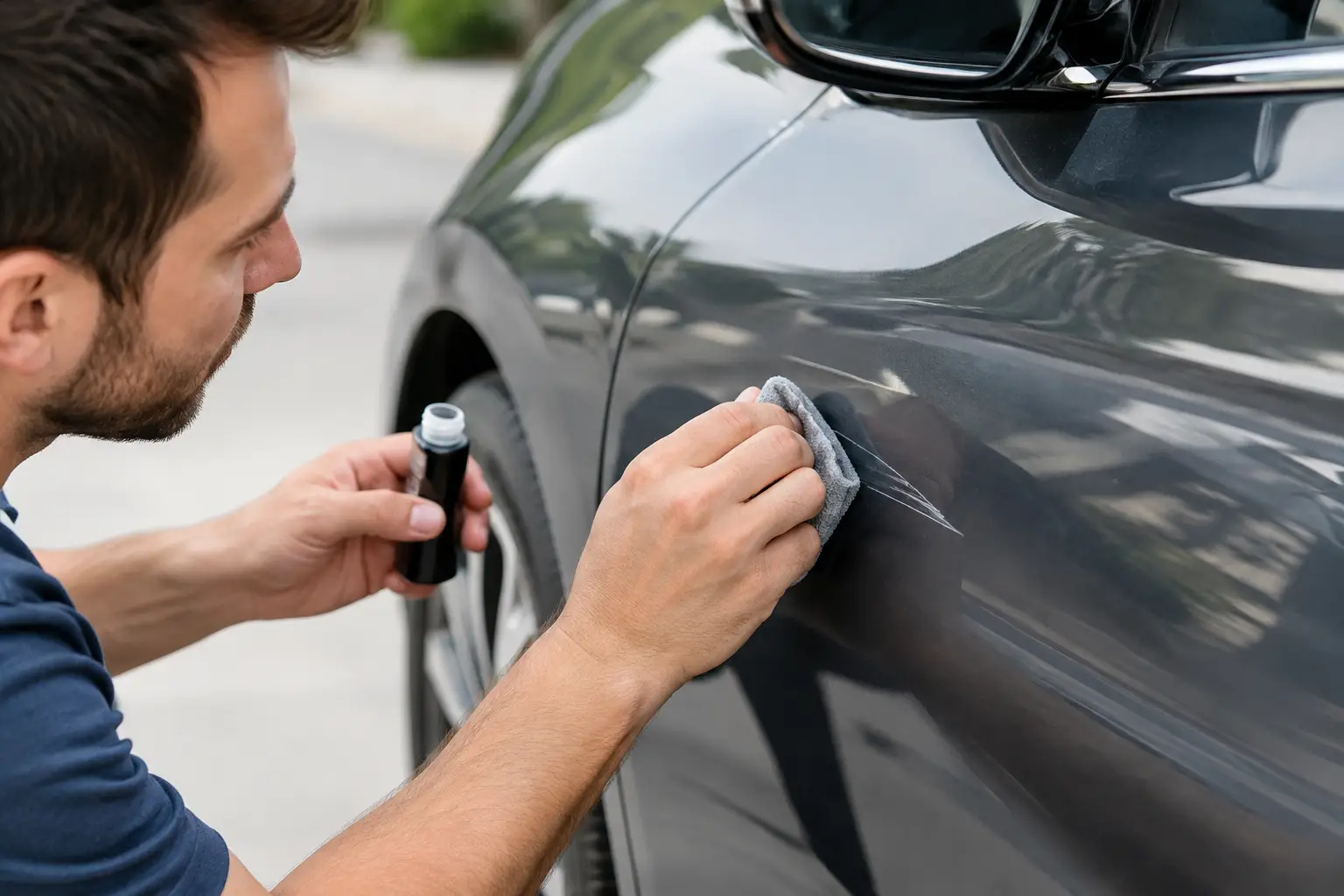
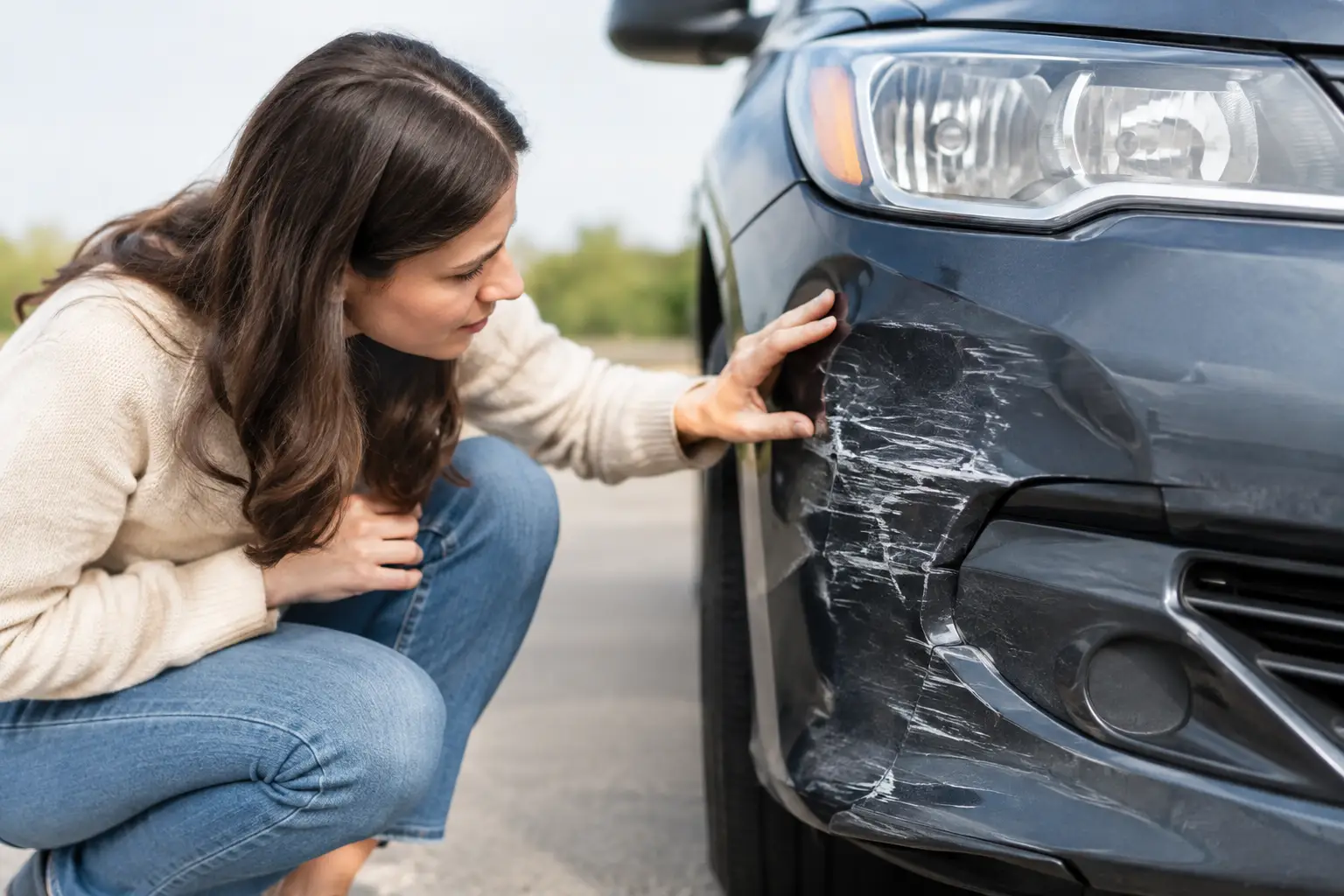
Next, inspect the damaged area at closer range. Light scratches that have not cut through the clear coat may be cosmetic. Deeper scratches often catch a fingernail and may require refinishing to restore a clean, durable finish. Paint transfer from another vehicle or object can sometimes be less serious than it appears, but it should be assessed carefully before attempting to remove it. Aggressive household cleaners or abrasive products can worsen the finish.
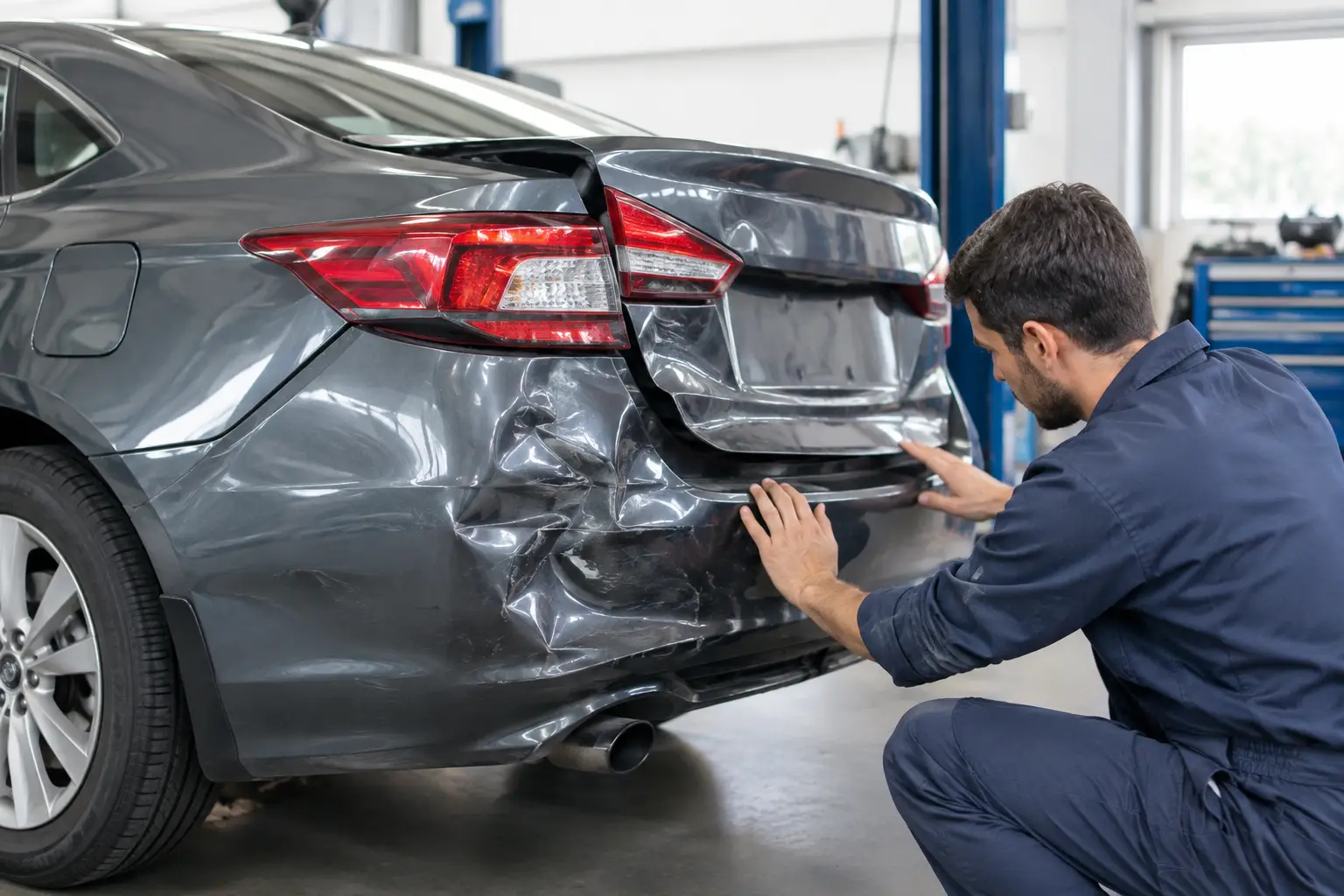
Look for cracking, splitting, punctures, or missing pieces. Plastic bumper covers can flex and recover after a minor impact, but a sharp crease, white stress marks, or a split near an edge may indicate that the material has been stretched or weakened. A cracked bumper should not be dismissed simply because it remains attached.
Check for Signs of Hidden Damage
The bumper cover is the visible outer skin. Behind it may be energy absorbers, reinforcement bars, brackets, wiring, radar units, sensors, and other vehicle-specific components. Damage in these areas is not always apparent from the driveway.
Open the hood after a front impact, or the trunk or liftgate after a rear impact, and look for anything that appears out of place. You are not trying to dismantle the vehicle. You are checking for bent metal, broken clips, loose wiring, fluid leaks, or panels that no longer close and latch normally.
A bumper impact can also affect nearby lights. Check headlights, fog lights, daytime running lights, taillights, reverse lights, and turn signals. Condensation inside a light housing, a loose lamp, or a new alignment issue can point to damage around the bumper mounting area.
Walk around the vehicle and watch for these four warning signs that warrant a professional inspection before normal driving:
- A bumper cover that is loose, shifted, cracked through, or rubbing against another panel or wheel
- Dashboard warnings involving airbags, parking assistance, cameras, collision avoidance, or other driver-assistance features
- New fluid leaks, unusual noises, steering changes, vibration, or a vehicle that pulls to one side
- A trunk, liftgate, hood, door, headlight, or taillight that no longer aligns, closes, or operates correctly
Not every concern means the vehicle has major structural damage. It does mean the impact should be evaluated by technicians who can inspect beneath the cover and determine what is repairable, what must be replaced, and whether recalibration is required.
Consider Sensors, Cameras, and Safety Systems
Many newer vehicles place parking sensors, radar components, and cameras in or near the bumper. Even a light impact can move a sensor just enough to affect its range or accuracy. A sensor that still appears to work is not automatically operating to manufacturer specifications.
Do not assume that a bumper cover can simply be pushed back into place when these systems are involved. Proper collision repair may include scanning the vehicle for fault codes, repairing or replacing damaged mounts, and recalibrating the relevant safety systems after the repair. The correct process depends on the make, model, location of the impact, and equipment installed on the vehicle.
This is one of the most important trade-offs in a bumper repair decision. A quick cosmetic fix may cost less initially, but it may not address hidden damage or restore the performance of safety technology. Professional assessment helps separate a surface-level repair from a repair that needs a more complete approach.
Document the Damage Before Cleaning or Repairing It
Clear documentation protects you whether you are arranging a private repair, speaking with an insurer, or simply tracking the condition of your vehicle. Take wide photos that show the full front or rear of the vehicle, then take close photos of scratches, cracks, gaps, and damaged components. Photograph the other vehicle or object involved when appropriate, along with the location, licence plates, road conditions, and any visible debris.
Make a short note while the details are fresh. Record the date, time, location, direction of impact, estimated speed, and anything you noticed immediately afterward, such as a warning light or unusual noise. If you receive a claim number, keep it with your photos and repair paperwork.
Avoid washing away evidence or applying touch-up paint before the damage has been documented. Cleaning loose dirt is reasonable for inspection, but do not hide a crack, remove transferred paint aggressively, or make temporary repairs that could make the original damage difficult to evaluate.
Decide Between Repair and Replacement
Minor scuffs, isolated scratches, and small dents in an otherwise sound bumper cover can often be repaired and refinished. A high-quality repair aims to restore the appearance of the panel while maintaining proper fit and a durable paint finish.
Replacement may be the better choice when the bumper is badly cracked, torn, distorted, missing material, or unable to mount securely. It can also be necessary when sensor mounts or other integral features have been damaged. The right answer depends on the material, severity, vehicle design, parts availability, and whether the repair can meet the expected safety and finish standard.
A professional estimate should explain the visible damage, possible hidden concerns, and the recommended repair path. Ask whether the quote includes paint matching, replacement clips or brackets, sensor checks, and any calibration needed after repairs. Clear answers help you compare options based on workmanship and vehicle safety, not price alone.
For Hamilton drivers, ASC Auto Body & Sales can inspect bumper damage with the same precision applied to complete collision repair, refinishing, and mechanical service. If a bumper has shifted, cracked, or triggered a warning light, arranging an assessment promptly can prevent a small issue from becoming a larger repair – and help you get back on the road with confidence.