




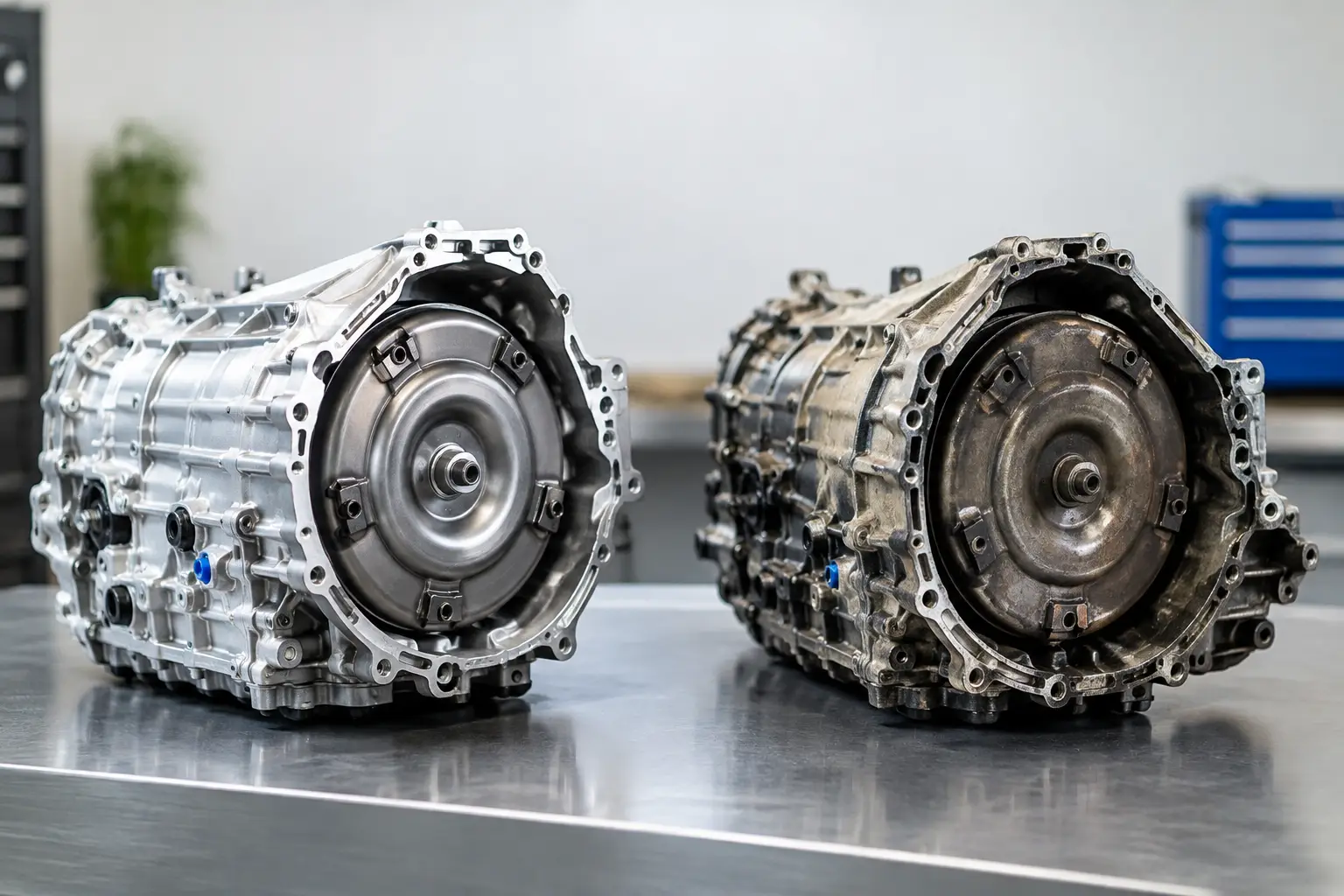
A transmission failure rarely arrives at a convenient time. One day your vehicle hesitates leaving a stoplight, slips between gears, or displays a warning light. The next, you are weighing a new versus rebuilt transmission decision that can affect your budget, vehicle reliability, and plans for the years ahead.
The right answer is not automatically the most expensive option or the lowest initial quote. It depends on the vehicle’s age, overall condition, mileage, how the transmission failed, and how long you intend to keep it. A proper diagnosis comes first. Many shifting concerns can be caused by fluid condition, sensors, wiring, a valve body issue, or engine performance problems rather than a failed transmission assembly.
What Does a New Transmission Mean?
A new transmission is generally a completely new unit supplied by the vehicle manufacturer or an approved parts source. Its major internal components have not been previously used, and it is built to the specifications intended for that vehicle.
For owners of newer vehicles, low-mileage vehicles, or vehicles with strong resale value, a new unit can be appealing. It offers the greatest degree of certainty about the condition of internal parts, and manufacturer-backed coverage may be available depending on the vehicle, supplier, and installation terms.
The trade-off is cost. New transmissions are often the most expensive choice, particularly for late-model vehicles with electronically controlled or continuously variable transmissions. Availability can also affect timing. Some assemblies need to be ordered, and certain models may have limited supply.
A new unit is not a guarantee that every related transmission concern disappears on its own. The shop must still identify and correct the cause of the original failure. A restricted transmission cooler, contaminated lines, a damaged torque converter, or a control-module concern can shorten the life of a replacement unit if left unaddressed.
What Is a Rebuilt Transmission?
A rebuilt transmission is your existing unit, or a compatible core, that has been disassembled and inspected. Worn, damaged, and failure-prone components are replaced, then the transmission is reassembled, tested, and installed.
A quality rebuild is far more than changing fluid and seals. Depending on the diagnosis, it may involve replacing clutch packs, steels, bearings, bushings, solenoids, seals, gaskets, hard parts, and updated components designed to address known weaknesses. The exact scope should reflect the condition found inside the transmission.
This route can be an excellent value when the vehicle is otherwise in good mechanical shape. It may also be practical for older vehicles when a new factory assembly is no longer readily available. Because a rebuild can focus on the specific failed areas while renewing key wear items, it can restore dependable operation at a lower cost than a new replacement.
The quality of a rebuilt transmission depends heavily on workmanship, parts selection, cleaning procedures, and testing. That is why the details of the estimate and warranty matter. “Rebuilt” is not a single universal standard. Two quotes with the same label can represent very different levels of repair.
New Versus Rebuilt Transmission: The Main Differences
The biggest difference between a new versus rebuilt transmission is the starting point. A new unit begins with all-new internal components. A rebuilt unit begins with an existing transmission case and selected reusable parts that have passed inspection, while worn or damaged items are replaced.
Cost is usually the next major consideration. A rebuild often costs less than a new transmission, but the final price depends on the vehicle, transmission design, extent of damage, parts availability, and related repairs. Front-wheel-drive vehicles, all-wheel-drive systems, heavy-duty trucks, and modern units with integrated electronics can require more labour and specialized parts.
Warranty coverage varies as well. A new unit may carry a manufacturer or supplier warranty, while a rebuilt transmission warranty is set by the rebuilder or repair facility. Coverage is valuable, but read beyond the number of months or kilometres. Ask what parts and labour are covered, whether fluid service requirements apply, and whether external components such as coolers or torque converters are included in the repair plan.
Turnaround time can go either way. A new transmission may be quicker if the correct assembly is locally available. A rebuild may be faster when parts are available and the transmission can be repaired without waiting for a factory unit. Conversely, either option can take longer when uncommon parts, programming needs, or extensive internal damage are involved.
When a New Transmission May Be Worth It
A new transmission can make sense when the vehicle is relatively new, has low kilometres, and is in excellent condition overall. If you expect to keep the vehicle for many years, the added upfront investment may fit your long-term plans.
It can also be the stronger choice where a manufacturer assembly offers specific updates, calibration compatibility, or warranty terms that suit the vehicle. For business owners and fleet operators, reduced uncertainty may be especially valuable when a vehicle is needed daily for deliveries, service calls, or moving equipment.
Before approving the work, compare the repair cost with the vehicle’s present value and expected remaining life. Spending significantly on a new unit may not be sensible if the engine, suspension, body condition, or other major systems are nearing costly repairs.
When a Rebuild Is the Better Value
A rebuild is often worth considering when your vehicle has been well maintained and the rest of it remains safe, reliable, and suitable for your needs. It can provide a practical balance between repair cost and long-term performance, particularly for a vehicle you know well and want to keep on the road.
It may also suit enthusiasts and owners of older vehicles where maintaining the original drivetrain matters, or where a new replacement is unavailable. In these cases, careful inspection and professional rebuilding can be preferable to searching for an unknown used transmission.
A used transmission is a separate option from a rebuilt one. While it may have a lower purchase price, its internal condition and maintenance history are usually uncertain. It may already have substantial wear, and its warranty is often more limited. For many drivers, the apparent savings can disappear if the used unit develops the same symptoms months later.
Questions to Ask Before You Approve the Repair
The best transmission decision begins with a clear diagnosis, not pressure to replace an assembly. Ask what tests confirmed the fault and whether the concern can be repaired externally. A scan of trouble codes alone is not always enough; road testing, fluid inspection, pressure testing, and electrical checks can all help identify the true problem.
You should also ask what is included in the quote. Find out whether it covers removal and installation, fluids, programming or relearn procedures, replacement of the filter, cooler flushing or replacement, torque converter service, seals, mounts, and road testing. A low estimate that excludes necessary related work can become costly later.
Finally, ask about the warranty in plain language. Understand who handles a concern if it develops, what maintenance is expected, and whether the warranty applies to both parts and labour. A professional repair facility should be comfortable explaining these details before work begins.
Protecting Your Replacement Transmission
Whether you choose new or rebuilt, the work around the transmission matters. Old debris or burnt fluid left in cooling lines can contaminate the replacement. A failing cooler can cause overheating. An engine misfire, faulty sensor, low battery voltage, or software issue can create shifting symptoms that resemble an internal transmission problem.
After replacement, follow the recommended maintenance schedule for your vehicle and pay attention to changes in shift quality. Delayed engagement, harsh shifts, slipping, leaks, or warning lights should be inspected early. Prompt service can prevent a smaller concern from becoming another major repair.
For Hamilton drivers, ASC Auto Body & Sales can assess transmission concerns alongside the vehicle’s broader mechanical condition, helping you make a repair decision based on clear findings rather than guesswork. Bring the vehicle in when the first symptoms appear, ask for the repair details that matter, and choose the option that gives you confidence every time you select Drive.