



A brake concern rarely arrives at a convenient time. It may start with a light squeal on the school run, a steering-wheel vibration on the QEW, or a brake pedal that suddenly feels softer than usual in Hamilton traffic. Prompt brake repair Hamilton drivers can depend on is about more than stopping an irritating sound. It protects your ability to stop confidently when road conditions, traffic, or the unexpected demand it.
Brakes wear gradually, which makes it easy to put off service when a vehicle still seems to stop. But stopping distance, pedal feel, and vehicle control can change long before a complete loss of braking. A professional inspection identifies what is wearing, why it is wearing, and whether the concern requires immediate repair or can be planned as routine maintenance.
The brake warning signs worth taking seriously
Some brake noises are temporary. Surface rust can form on rotors after a damp Hamilton night, particularly when a vehicle has been parked outside. A brief scraping sound that disappears after a few gentle stops may simply be that rust clearing away. A noise that returns, grows louder, or occurs every time you brake deserves a closer look.
Squealing often indicates that brake pads are approaching the end of their useful life, although pad material, dust, and hardware can also contribute. A harsh grinding sound is more urgent. It can mean the pad friction material has worn away and metal is contacting the rotor. Continuing to drive in that condition can turn a pad replacement into replacement of rotors, hardware, and possibly more components.
Pay attention to how the vehicle behaves as well. A brake pedal that feels spongy, sinks farther than normal, or requires pumping should be inspected without delay. So should a vehicle that pulls to one side under braking, shudders through the pedal, or vibrates through the steering wheel. These symptoms can point to uneven pad or rotor wear, a sticking caliper, damaged brake hardware, or an issue with brake fluid and hydraulic components.
A brake warning light is another reason to arrange service promptly. The light may relate to the parking brake, fluid level, electronic brake system, or another fault that requires proper diagnosis. It is not a light to dismiss simply because the vehicle seems to be driving normally.
What a proper brake service should assess
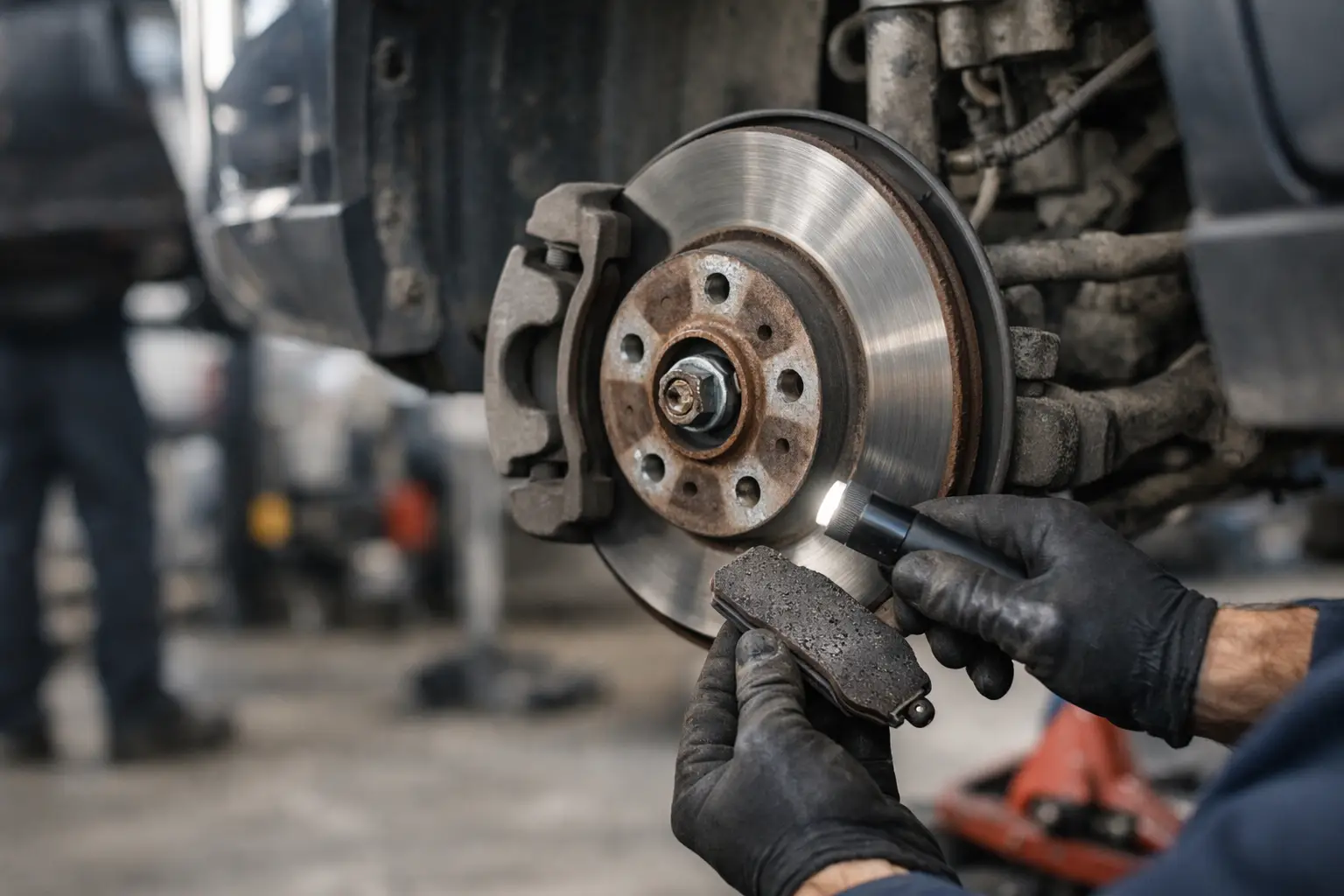
Effective brake service is not just a quick look at the pads. Your braking system works as a group: pads create friction, rotors provide the surface they grip, calipers apply pressure, brake fluid transfers that pressure, and hardware helps the system move correctly. A weakness in one area can affect the life and performance of the others.
During an inspection, a technician should assess the remaining thickness and wear pattern of the brake pads, the condition and thickness of the rotors, and the movement of calipers and slide pins. Uneven wear may reveal a caliper that is not releasing properly or hardware that has corroded. In Ontario, road salt and changing temperatures can speed up corrosion around brake components, particularly on vehicles that see frequent winter driving.
Brake fluid also matters. It absorbs moisture over time, which can reduce its performance and contribute to internal corrosion. Whether a fluid service is due depends on the manufacturer’s maintenance schedule, the vehicle’s age, and the condition of the fluid. It should be recommended based on inspection and service requirements, not as a one-size-fits-all add-on.
A thorough check also includes brake hoses, lines, parking-brake operation, tire condition, and any related warning lights. The goal is to identify the actual source of the concern before replacing parts. That approach helps protect your budget while maintaining the high standard of safe, reliable performance your vehicle needs.
Pads, rotors, calipers, and the right repair for your vehicle
Brake pads are consumable items, but the repair is not always limited to pads alone. If rotors are worn below specification, heavily scored, corroded, or heat-damaged, they may need replacement. In some cases, rotors can be machined if they remain within the manufacturer’s minimum thickness and their condition allows it. The right choice depends on measurements and condition, not assumptions.
Calipers usually last longer than pads and rotors, but they can seize or stick. A seized caliper can cause one wheel to run hot, create a burning smell, pull the vehicle during braking, and wear a new set of pads unevenly in a short period. Replacing pads without addressing the underlying caliper issue will not deliver a lasting repair.
The same principle applies to brake hardware. Clips, shims, and slide-pin boots may seem minor, yet they support quiet operation and even pad movement. Quality parts and careful installation matter because brakes are a safety system, not an area for shortcuts. A reliable repair should restore predictable pedal feel, smooth braking, and balanced stopping performance.
Why Hamilton driving conditions can accelerate brake wear
There is no universal kilometre interval for brake replacement. A commuter who spends most of the week on open highway may see different pad life than a driver making frequent short trips through busy city streets. Stop-and-go traffic, steep grades, towing, cargo weight, driving habits, and vehicle size all affect wear.
Hamilton winters add another consideration. Salt, slush, and moisture can build up around rotors, calipers, and parking-brake components. Vehicles that are driven only occasionally may be especially vulnerable to corrosion because the brakes do not get regular use. Spring is a practical time to book an inspection, but any new noise, pull, vibration, or warning light should take priority over the calendar.
Electric and hybrid vehicles have their own pattern. Regenerative braking can reduce pad wear in many driving situations, but the conventional friction brakes still need periodic inspection. Because they may be used less aggressively, corrosion and sticking components can become a concern even when pad thickness appears good.
When to stop driving and arrange immediate help
Some brake issues should not wait for your next available appointment. If the pedal goes close to the floor, braking power is noticeably reduced, the vehicle pulls sharply, you hear persistent metal-on-metal grinding, or you see smoke from a wheel area, stop driving as soon as it is safe to do so. Continuing could put you, your passengers, and other road users at risk.
A strong burning odour after normal driving can also signal an overheated brake. Avoid touching the wheel or brake area, as components may be extremely hot. Let the vehicle cool and have it assessed professionally. If a warning light appears alongside a major change in pedal feel or braking response, treat the situation with the same caution.
For less urgent concerns, booking early still makes good sense. Addressing a squeal or light vibration before it becomes grinding can often reduce the scope of repair and keep your vehicle available for work, family commitments, and everyday travel.
Choose inspection over guesswork
Brake repair should come with clear communication. You should understand which components are worn, what the technician found, what repair is recommended now, and what maintenance can be monitored. Photos, measurements, and a straightforward explanation can make decisions much easier, especially when a vehicle is also being inspected after a collision or alongside other mechanical work.
At ASC Auto Body & Sales, experienced technicians approach brake service with the same precision applied to collision repair and vehicle restoration. Whether your vehicle needs pads and rotors, a caliper repair, brake-fluid service, or diagnosis of a warning light, the focus is on safe operation and work completed to a high standard.
Your brakes are one of the few systems you rely on every time you drive, often without thinking about them. If something feels, sounds, or responds differently, trust that signal and arrange a professional inspection before a small concern becomes the reason you cannot stop with confidence.