



A hailstorm can leave your vehicle looking much better than it actually is. Small dents may be hard to see in a driveway, while a cracked windshield edge, damaged moulding, or weakened paint surface can turn into a larger repair concern after a few weeks of Hamilton weather. Knowing how to assess hail damage promptly helps you protect your vehicle, document the condition properly, and make a confident decision about repair.
Hail damage is usually cosmetic, but not always. The force, size, and direction of the hail, along with the age and condition of your vehicle, all affect what needs attention. A careful inspection gives you a clearer picture before you speak with your insurer or arrange professional collision repair.
Start With a Safe, Well-Lit Inspection
Do not inspect your vehicle while hail is still falling, during lightning, or where branches and power lines may be unstable. Once conditions are safe, move the vehicle into a garage or under cover if possible. You are not trying to repair anything yet. The goal is to identify visible damage and prevent more exposure.
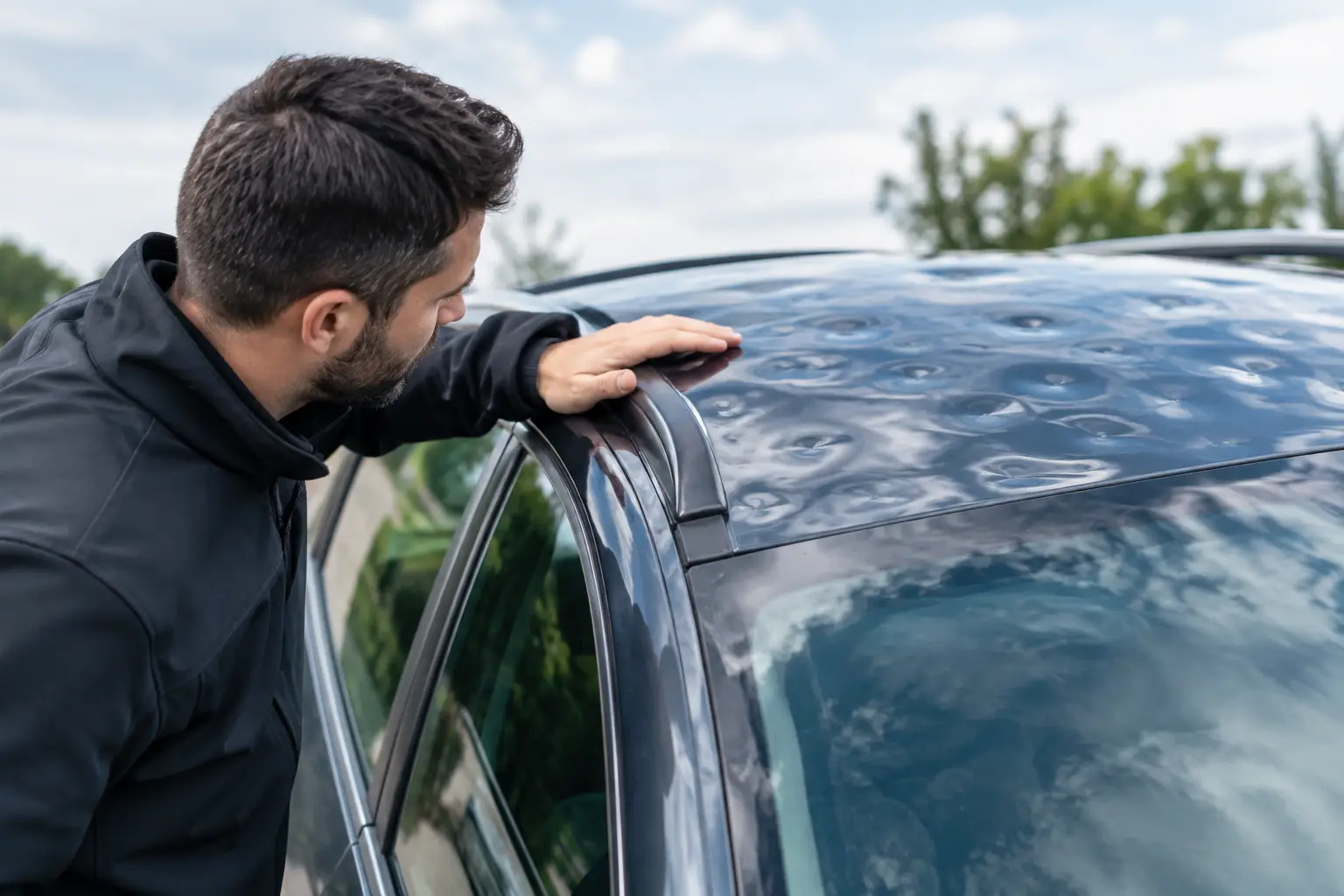
Lighting makes a major difference. Bright daylight can hide shallow dents because reflections appear flat. Stand at an angle to each body panel and look for distorted reflections in the paint. An overhead garage light, a flashlight held low against the panel, or the reflection from a nearby building can reveal dents that are nearly invisible head-on.
Walk around the vehicle slowly and inspect one area at a time. Start with the roof, then check the hood, trunk or liftgate, doors, fenders, quarter panels, mirrors, and bumpers. The roof and hood often take the greatest impact, but hail can strike any exposed surface depending on wind direction.
How to Assess Hail Damage Beyond Obvious Dents
A dent is the most familiar sign of hail damage, but it is not the only one worth recording. Look closely at the paint around each impact point. If the paint is cracked, chipped, or missing, moisture can eventually reach the metal below. That raises the risk of corrosion, particularly through Ontario’s wet seasons and winter road salt.
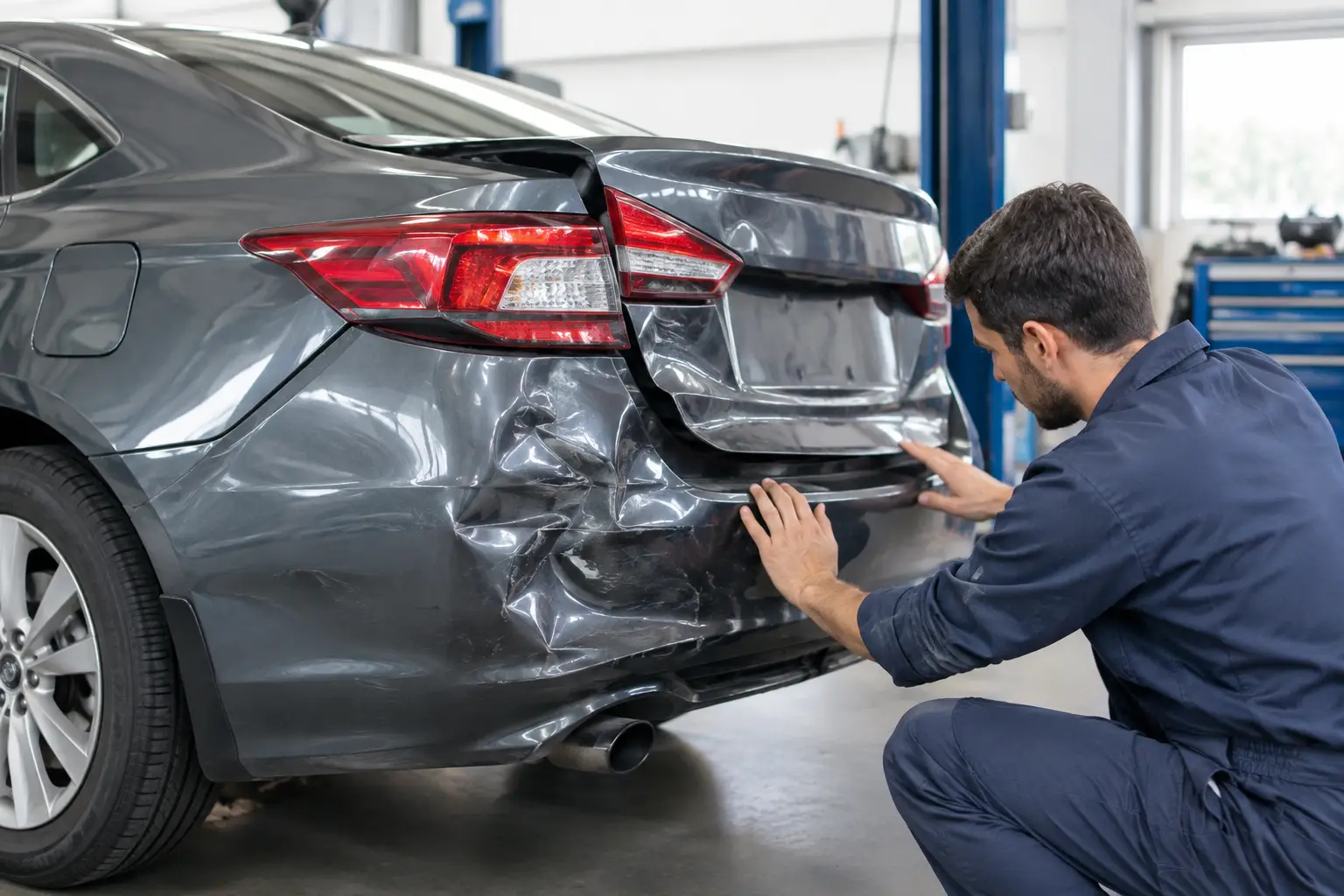
Pay attention to the size, depth, and location of each dent. A shallow, round dent in the middle of a metal panel may be a candidate for paintless dent repair. A sharp crease, damage along a body line, or a dent near the edge of a panel may require a different repair approach. Modern vehicles also use a mix of steel, aluminum, plastic, and composite materials, which affects what can be repaired and how.
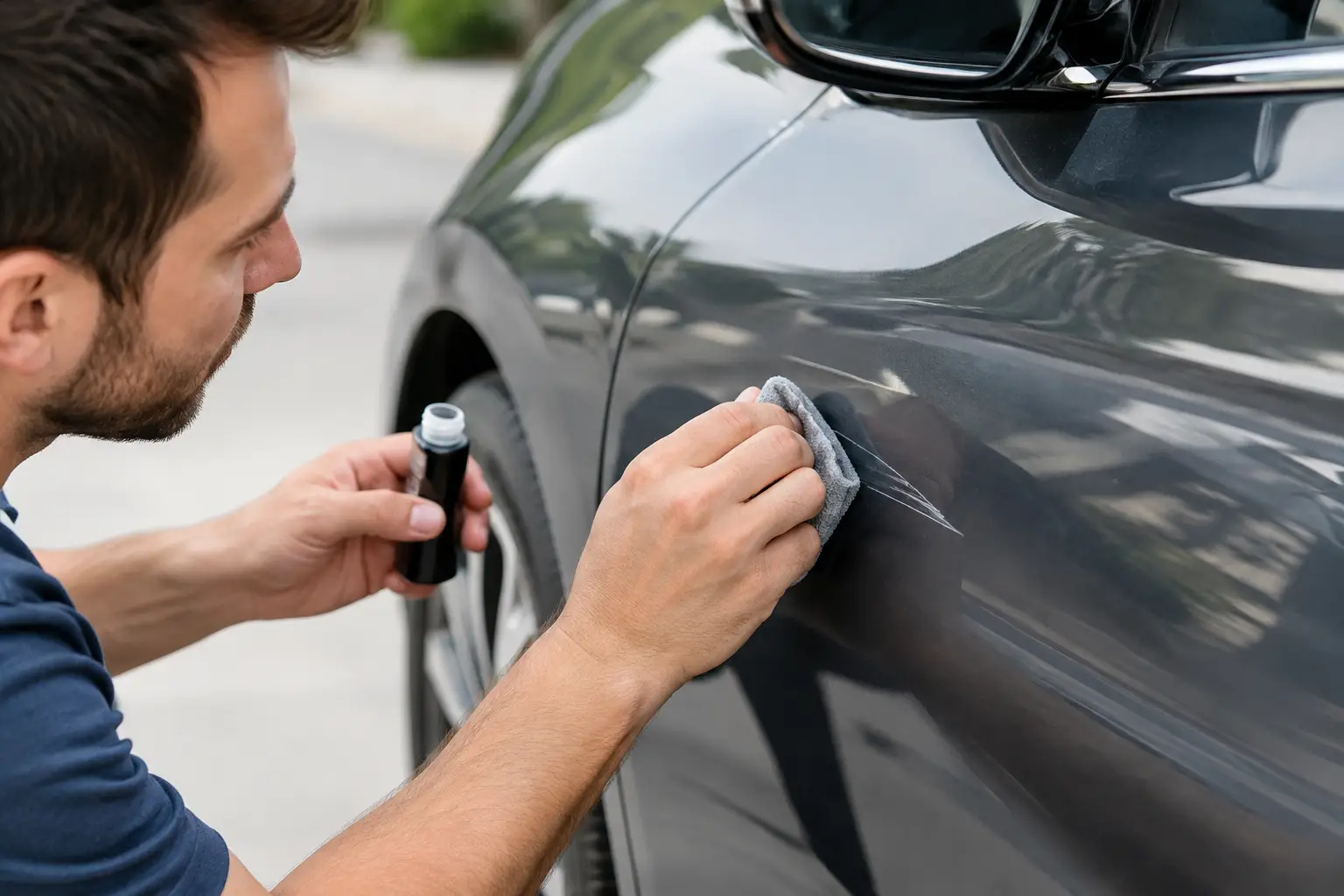
Do not press hard on dents or try to pop them out with suction cups, heat, dry ice, or online DIY methods. These attempts can stretch the metal, crack the paint, disturb factory finishes, or make a clean professional repair more difficult. What first looks like a quick cosmetic fix can become a refinishing job.
Check Glass, Lights, and Exterior Trim
Inspect the windshield, rear glass, side windows, sunroof, headlights, taillights, and mirrors. Look for chips, star-shaped cracks, pitting, loose trim, and moisture inside lamp housings. A small windshield chip may be repairable when addressed early, but vibration and temperature changes can allow it to spread.
Check the edges of the windshield and roofline carefully. Hail can damage mouldings or seals without breaking the glass outright. If you see lifting trim, gaps, water leaks, or a crack that affects your view of the road, avoid delaying service.
Also inspect the grille, hood vents, wiper arms, antenna, roof rails, license plate, and plastic bumper covers. Plastic pieces may show scuffs, fractures, or small impact marks rather than traditional dents. Make sure headlights and taillights still operate, and confirm that mirrors are secure and adjustable.
Look for Signs That Affect Safe Operation
Most hailstorms do not cause mechanical damage, but your inspection should still include basic safety checks. Confirm the hood, trunk, and doors open, close, and latch normally. Check that windshield wipers move freely and that no broken glass or loose trim could interfere with visibility.
If the vehicle has a sunroof, inspect the surrounding seal and test it only after you have cleared away loose debris. Watch for water stains on the headliner or damp carpeting after rain. Water intrusion can lead to mould, electrical concerns, and interior damage if ignored.
Some newer vehicles have cameras, radar sensors, and driver-assistance equipment mounted behind windshields, grilles, mirrors, or bumpers. If hail has cracked a camera lens, damaged a sensor cover, or affected a windshield near an ADAS camera, professional assessment is the right next step. Proper repair may involve calibration to ensure safety systems function as designed.
Document the Damage Before Cleaning or Repairing
Take photos as soon as it is safe. Start with wide photos showing the entire vehicle from several angles, then take close-ups of each damaged panel, crack, chip, and broken component. Photograph the roof from an elevated position if you can do so safely, and include images that show dents through reflected light.
Record the date, approximate time, and location of the storm. If possible, note the size of the hail and any immediate issues such as broken glass or water entering the cabin. Keep weather alerts, repair estimates, towing receipts, and communications with your insurer in one place.
Avoid washing the vehicle until you have photographed it thoroughly. Dirt does not cause hail damage, but cleaning too early can make small marks harder to identify in photos. Once documented, gently remove leaves, branches, and debris so you can see the panels more clearly. Do not use a pressure washer near cracked glass, loose trim, or damaged seals.
Decide Whether to Contact Your Insurer
Whether you should make a claim depends on your insurance coverage, deductible, the scope of damage, and the value of the repair. Hail damage is commonly handled under comprehensive coverage, rather than collision coverage, but every policy has its own terms. Reviewing your policy before approving work helps prevent surprises.
A professional estimate is useful even when you are unsure about filing a claim. Small dents across several panels can add up, and hidden damage to glass, paint, mouldings, or sensors may not be visible during a quick driveway inspection. Conversely, a minor issue may cost less than your deductible to address privately.
Before authorizing repairs, ask how the shop will document the damage, whether paintless dent repair is appropriate, and whether refinishing or replacement is needed. An experienced collision repair facility can explain the repair plan in plain language and help you understand what will restore both appearance and proper function.
When Paintless Dent Repair May Be the Right Choice
Paintless dent repair, often called PDR, is designed to reshape accessible metal panels without repainting them. It can be an excellent option for hail dents when the factory paint is intact, the metal has not been sharply stretched, and the dent location allows access from behind the panel.
The advantage is preserving the original finish while reducing repair time and avoiding unnecessary refinishing. However, PDR is not suitable for every vehicle or every impact. Deep dents, creases, cracked paint, aluminum panels, reinforced areas, and damage near panel edges may require traditional body repair and paint work.
The best repair method should be based on the condition of your vehicle, not simply the fastest option. A quality assessment considers panel material, paint condition, access points, structural contours, and the standard needed to return the vehicle to a like-new appearance.
Get a Professional Assessment Before Small Problems Grow
A hail-damaged vehicle can still drive normally, which makes it tempting to wait. But cracked paint can expose metal to corrosion, windshield chips can spread, and water leaks can affect interior materials and electrical components. Early inspection also makes insurance documentation easier while the storm event is recent.
For Hamilton drivers, ASC Auto Body & Sales provides careful collision and auto body assessments backed by more than two decades of local experience. Skilled technicians can identify visible and less obvious hail-related concerns, explain practical repair options, and help restore your vehicle’s appearance, safety, and road-ready condition.
After you have taken photos and completed your initial check, arrange a professional assessment rather than guessing at the full extent of the damage. A precise repair plan protects the value of your vehicle and gives you confidence every time you get back behind the wheel.