



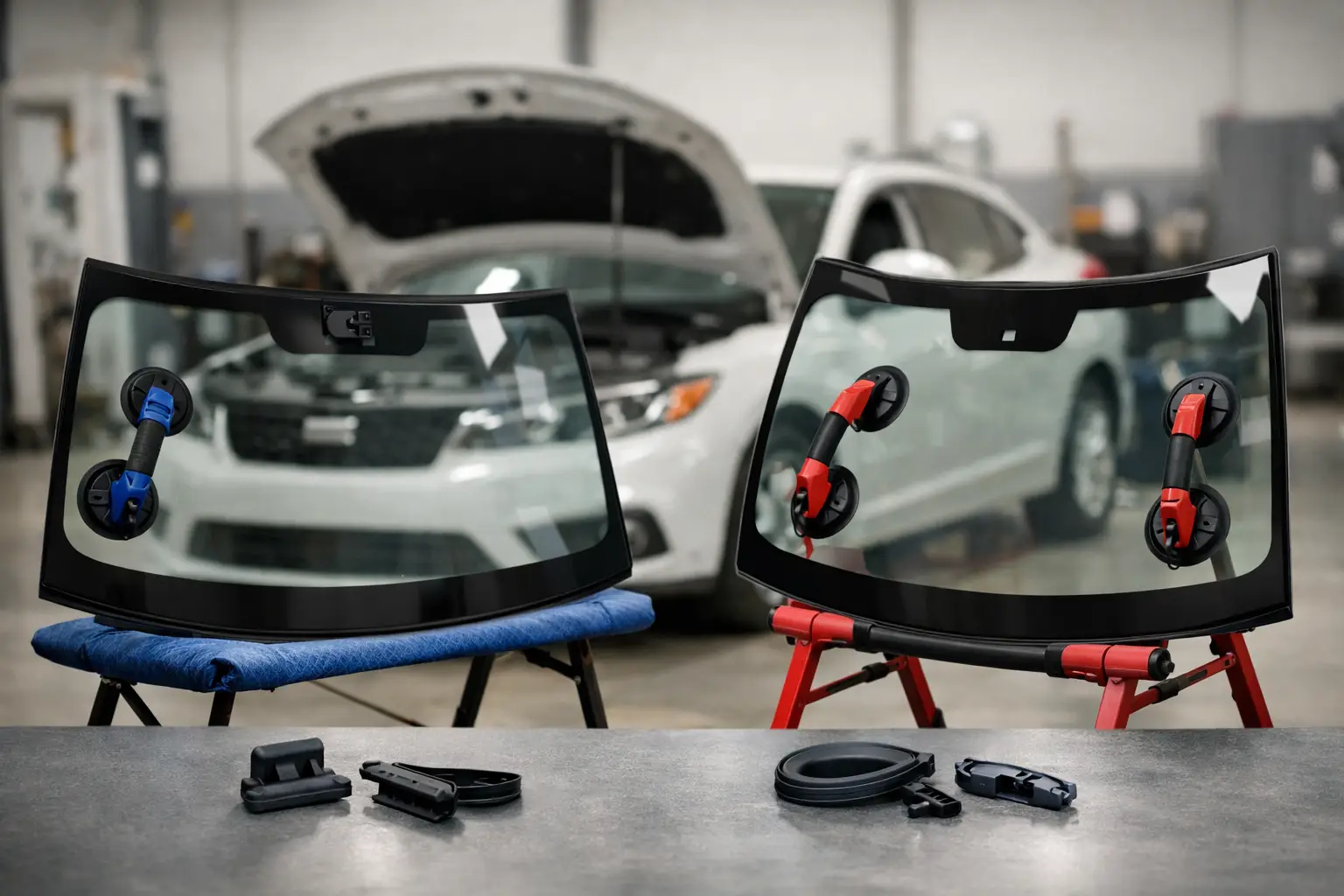
A cracked windshield can look like a straightforward replacement until you are asked to choose OEM versus aftermarket glass. The right answer is not automatically the most expensive option or the quickest one available. It depends on your vehicle, the type of glass damaged, its safety technology, your insurance coverage, and the standard of finish you expect once the repair is complete.
For Hamilton drivers, the goal should always be the same: restore clear visibility, proper fit, dependable sealing, and the safety features your vehicle was designed to use. A professional assessment helps make that decision with facts rather than assumptions.
What OEM glass means
OEM stands for Original Equipment Manufacturer. In automotive glass, this generally means a replacement windshield, side window, rear window, or other glass component made to the vehicle manufacturer’s original specifications. It may be produced by the same glass supplier that made the factory-installed piece and is typically sold with the automaker’s branding or part identification.
OEM glass is designed for a particular make, model, trim, and production range. That matters because glass is no longer simply a clear barrier between the cabin and the road. A modern windshield may include mounting locations for cameras and sensors, heating elements, an acoustic layer, antenna connections, rain sensors, a head-up display area, or special shading.
The most visible benefit of OEM glass is consistency. Its shape, thickness, colour band, optical quality, attachments, and sensor brackets are intended to match the original component. For a newer vehicle with advanced driver-assistance systems, this close match can reduce uncertainty during installation and calibration.
That said, OEM does not mean every vehicle needs OEM glass in every situation. It is one quality option, and its value depends on what the vehicle requires.
What aftermarket glass means
Aftermarket glass is made by companies other than the vehicle manufacturer. Quality aftermarket manufacturers build glass for a wide range of vehicles, often to meet applicable Canadian and North American safety standards. Many replacement pieces are reliable, properly certified, and suitable for everyday vehicles.
The key word is variation. Aftermarket products are not all built to the same specifications or supplied by the same manufacturer. One windshield may closely match the original in fit and features, while another could differ in tint, acoustic performance, sensor mounting details, optical clarity, or edge finish.
A quality aftermarket windshield can be a sensible choice when the vehicle does not have complex camera or display systems, when the correct features are available, or when managing the repair cost is a priority. It can also be an appropriate option for older vehicles where factory-branded glass offers little practical advantage.
The decision should be based on the exact replacement part, not a broad assumption that all aftermarket glass is inferior or that OEM is always necessary.
OEM versus aftermarket glass: the practical differences
The largest differences usually come down to fit, features, cost, availability, and brand preference. They are worth discussing before a replacement begins, especially after a collision or when a windshield has sustained impact damage.
Fit and finish
OEM glass is engineered to match the original design, so it may offer the closest match around mouldings, seals, camera brackets, frit bands, tint, and glass curvature. On premium models, vehicles with panoramic windshields, or vehicles where wind noise has been a concern, this can be a meaningful consideration.
Well-made aftermarket glass can also fit correctly when installed by experienced technicians using the proper adhesives, clips, mouldings, and procedures. Poor fit is not always a glass problem. It can result from damaged mounting surfaces, reused worn trim, incorrect urethane application, or rushed installation.
A proper installation is essential regardless of the glass chosen. The windshield must sit at the correct depth, bond securely to the frame, and seal against water and wind. A replacement that appears fine at first can create leaks, wind noise, or trim problems if those details are overlooked.
Safety and structural performance
Your windshield contributes to more than visibility. In many vehicles, it is part of the passenger compartment’s overall structural design and can support airbag deployment performance. That is why correct glass, approved installation materials, and safe drive-away curing times matter.
Both OEM and properly certified aftermarket glass can be safe when the correct part is selected and installed to specification. The concern arises when a replacement lacks the features the vehicle needs, does not fit correctly, or is installed without proper preparation and curing.
Side and rear glass require the same care, even though the decision may be simpler. These components can involve defroster grids, antenna elements, privacy tint, mounting hardware, and precise contouring. Choosing the right replacement helps preserve both appearance and function.
ADAS cameras and windshield calibration
Many late-model vehicles use a forward-facing camera mounted near the rear-view mirror. It may support features such as lane-departure warnings, lane-keeping assistance, automatic emergency braking, adaptive cruise control, traffic-sign recognition, or automatic high beams.
After a windshield replacement, these systems may require calibration. This is not an optional finishing touch. If the camera position, windshield specifications, or mounting relationship changes, the vehicle may not interpret the road accurately until calibration has been completed according to the manufacturer’s procedure.
OEM glass may be the preferred choice when a vehicle has a complex ADAS package, a head-up display, specialized camera brackets, or other integrated technology. In other cases, a compatible aftermarket windshield paired with proper calibration may perform as intended. The technician should confirm the part number, installed features, and calibration requirements before recommending either option.
Never assume that a warning light-free dashboard means the system is fully calibrated. Some functions require a scan tool procedure, target-based calibration, road calibration, or a combination of methods.
Optical clarity, comfort, and appearance
Most drivers notice glass only when something is wrong: distortion around the edges, glare at night, road noise, or a mismatch in tint. These details can affect comfort every day, particularly for commuters and drivers who spend long hours on the road.
OEM glass often provides the closest match for acoustic laminates, solar coatings, humidity sensors, and factory tint. It can be worthwhile for owners who want their vehicle restored as close to its original condition as possible.
Aftermarket options range widely. A reputable replacement may look and perform very similarly to the original. However, on some models, differences in sound insulation, visual markings, tint shade, or optical quality can be noticeable. An experienced shop can explain whether those differences are likely for your specific vehicle rather than making a blanket recommendation.
Cost, insurance, and availability
OEM glass generally costs more than aftermarket glass. It may also take longer to source, particularly for newer, less common, luxury, or specialty vehicles. If your vehicle is needed for work, family transportation, or fleet operations, availability can affect the practical choice.
Insurance policies vary. Some insurers specify aftermarket parts where appropriate, while others may approve OEM glass in certain circumstances, such as when the vehicle is very new, when aftermarket availability is limited, or when a compatible alternative does not meet the vehicle’s requirements. Deductibles, endorsement options, and claim details also affect out-of-pocket cost.
Before authorizing repairs, ask what glass is being quoted, what features it includes, whether calibration is required, and whether calibration is included in the estimate. A lower initial quote can become less attractive if it excludes necessary mouldings, sensor components, or calibration work.
When OEM glass is often the stronger choice
OEM glass is often worth considering for a newer vehicle with a windshield-mounted camera, head-up display, acoustic glass, specialized heating, uncommon trim, or exact factory tint requirements. It can also be the better fit for owners restoring a high-value vehicle, a leased vehicle with strict return-condition expectations, or a vehicle where preserving original specifications is a priority.
It may also make sense after collision damage if the windshield frame, roofline, or surrounding components require detailed restoration. In those cases, precision in every component supports a like-new result.
When aftermarket glass can make sense
A high-quality aftermarket option can be practical for older vehicles, straightforward windshield replacements, work vehicles, and situations where the correct features are available at a better price. It can be a responsible choice when the glass meets required standards, fits the vehicle properly, and is installed by technicians who follow the right procedures.
The sensible question is not, “Is aftermarket good enough?” It is, “Does this specific replacement glass match what this specific vehicle needs?” That is a much better standard for a safe, lasting repair.
Choose the repair, not just the part
A windshield replacement should include an inspection of the glass features, surrounding trim, frame condition, adhesive bonding area, and electronic systems. If your vehicle has ADAS technology, it should also include confirmation of the required calibration process and documentation that the work has been completed.
At ASC Auto Body & Sales, the focus is on helping Hamilton drivers make an informed choice that protects vehicle safety, performance, and appearance. Whether OEM or aftermarket glass is the better fit, the workmanship behind the installation matters every kilometre afterward.
If you are facing a cracked windshield, damaged side window, or collision-related glass repair, bring the vehicle in for a clear assessment before the damage spreads or visibility becomes a concern. The right replacement should leave you confident in the road ahead, not wondering what was missed.