



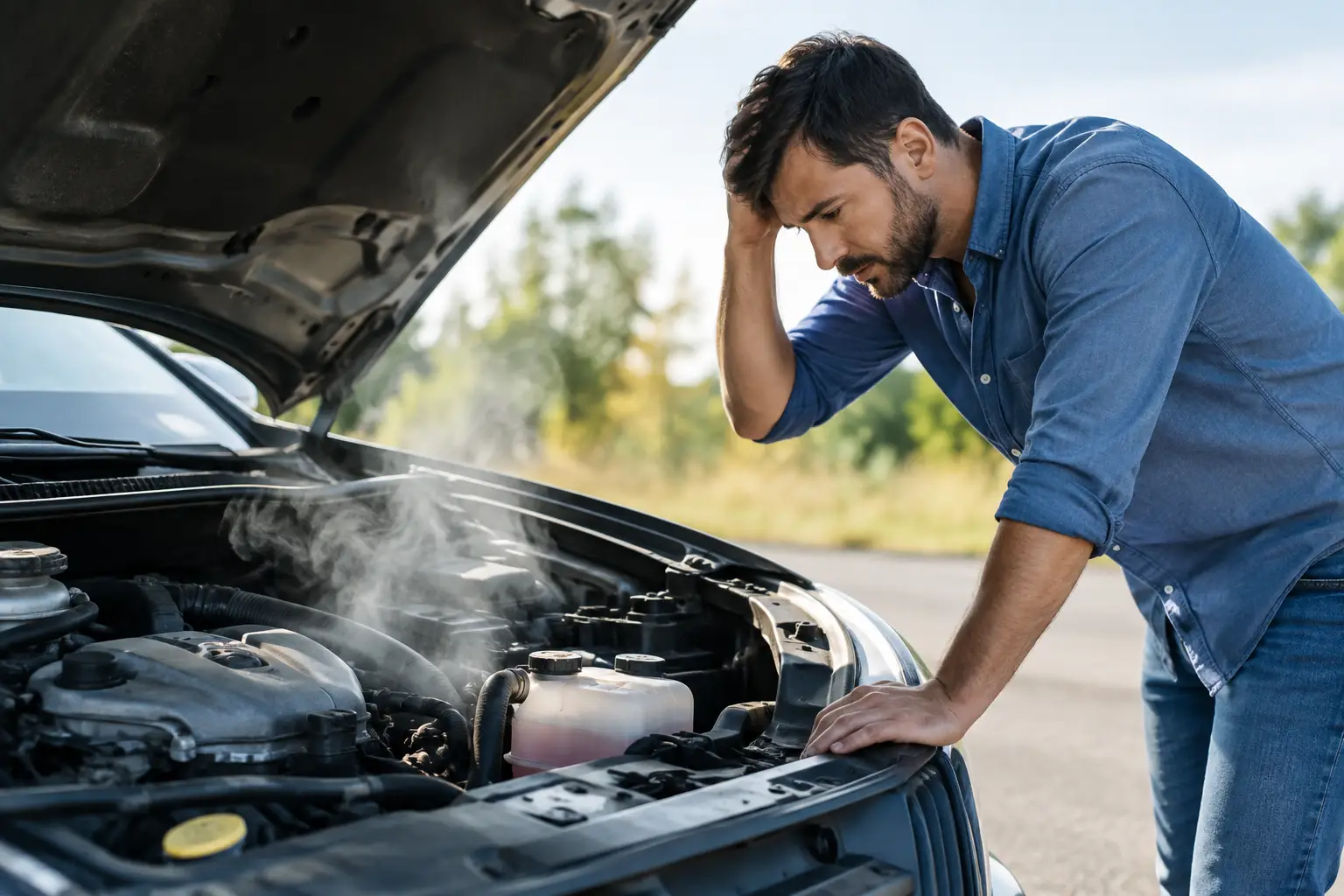
The temperature gauge has climbed past its normal position, a warning message appears, or steam is coming from under the hood. If you are asking, “why is my car overheating?”, treat it as a reason to stop safely rather than a warning to push through the rest of the drive. An overheating engine can turn a manageable cooling-system repair into serious engine damage in only a short distance.
For Hamilton drivers, overheating often shows up at the worst possible time: in slow traffic, on a hot day, while towing, or during a winter drive when a leak or circulation issue has gone unnoticed. The cause may be as straightforward as low coolant, but it can also involve a failed thermostat, a damaged radiator, or an internal engine concern. The right response protects both your safety and your vehicle.
What to Do When Your Car Starts Overheating
If the gauge enters the red zone, an engine-temperature warning light comes on, or you see steam, pull over as soon as it is safe. Turn off the air conditioning, which adds load and heat to the engine. If you need a brief moment to reach a safe shoulder or parking area, setting the heater to maximum heat can help move some heat away from the engine. It is uncomfortable, but it may provide a little extra time.
Once stopped, turn the engine off and allow it to cool completely. Do not remove the radiator cap or coolant reservoir cap while the engine is hot. The cooling system is pressurized, and hot coolant or steam can cause severe burns. Opening the hood carefully can help heat escape, but keep your hands and face clear of any steam.
After the vehicle has cooled, look for obvious signs such as a puddle beneath the vehicle, a split hose, or coolant sprayed around the engine bay. If the temperature rose sharply, steam was present, or the coolant level is low, arranging a tow is usually the safest choice. Continuing to drive can warp cylinder heads, damage head gaskets, or create expensive engine repairs.
Why Is My Car Overheating? Common Causes
Your engine produces a tremendous amount of heat. Coolant absorbs that heat, circulates through the engine and radiator, and releases it through the radiator with help from airflow and cooling fans. Overheating means something in that process is low, leaking, blocked, not circulating, or not switching on when it should.
Low coolant or a coolant leak
Low coolant is one of the most common reasons for high engine temperature. Coolant can escape through a cracked hose, loose clamp, worn radiator, leaking water pump, damaged reservoir, heater core, or failing gasket. Some leaks leave a visible puddle, often green, orange, pink, blue, or yellow depending on the coolant type. Others evaporate on hot components or leak internally, making them harder to spot.
Topping up coolant may temporarily restore the level, but it does not solve the reason it became low. Coolant should remain within the system. A professional pressure test can identify leaks that are not obvious during a quick visual inspection.
A thermostat that will not open
The thermostat controls when coolant flows from the engine to the radiator. When it opens as designed, heated coolant moves to the radiator to shed heat. If it sticks closed, coolant remains trapped around the engine, and the temperature can rise quickly.
A failed thermostat is often a relatively contained repair when addressed early. However, its symptoms can resemble other cooling-system problems, so diagnosis matters. Replacing parts based only on a guess can add cost without correcting the underlying fault.
Radiator problems and restricted coolant flow
A radiator needs clear internal passages and unobstructed external airflow. Over time, old coolant, rust, debris, or incompatible fluid can restrict passages inside the radiator. A collision, road debris, or corrosion can also damage the radiator fins or tank.
External blockage is worth considering as well. Leaves, dirt, plastic bags, or debris between the radiator and air-conditioning condenser can limit airflow, particularly at low speed. If your vehicle runs hot in city traffic but cools down at highway speed, restricted airflow or a fan issue becomes more likely.
Cooling fan or electrical failure
Modern vehicles rely on electric cooling fans when the car is idling, moving slowly, or running the air conditioning. A failed fan motor, relay, fuse, sensor, wiring connection, or control module can prevent those fans from operating at the required time.
This issue can be confusing because the vehicle may perform normally during a faster drive. More airflow passes through the radiator at highway speed, masking the fan problem. Then, at a stoplight or in a drive-through lane, the temperature climbs again. Accurate diagnostics can determine whether the fault is mechanical, electrical, or sensor-related.
Water pump failure
The water pump circulates coolant through the engine, heater core, hoses, and radiator. A worn pump may leak through its seal, develop bearing noise, or lose the ability to move coolant effectively. In some vehicles, the pump is driven by the timing belt or timing chain system, which can affect the labour required for replacement.
Because water-pump repairs vary substantially by vehicle design, an inspection should consider the complete cooling system rather than the pump alone. That approach helps prevent a new component from being installed while a separate leak or blockage remains.
Head gasket or internal engine damage
In more serious cases, overheating may result from a failed head gasket, a cracked cylinder head, or another internal engine problem. A head gasket seals combustion pressure, engine oil, and coolant passages. When it fails, combustion gases can enter the cooling system, coolant can enter the cylinders, or oil and coolant can mix.
Possible warning signs include repeated overheating without an obvious external leak, white exhaust smoke after the engine has warmed up, a sweet coolant smell from the exhaust, bubbling in the coolant reservoir, or milky-looking engine oil. None of these symptoms confirms a head-gasket failure on its own. Proper testing is needed before committing to a major repair.
Why Overheating Can Be Worse in Ontario Weather
Summer heat naturally reduces the cooling system’s margin for error. Stop-and-go traffic, heavy loads, air conditioning, steep grades, and towing can expose a thermostat, fan, or radiator that is already struggling. A vehicle that only overheats with the air conditioning on may have a cooling-fan or airflow problem, although the full system still needs inspection.
Winter does not eliminate overheating risk. Cold temperatures can hide early symptoms because the engine loses heat more easily, while freeze-thaw cycles can worsen an aging hose or weak clamp. Using the wrong coolant mixture can also reduce freeze protection and contribute to corrosion. For most Ontario vehicles, the correct coolant type and mixture specified by the manufacturer matter more than simply choosing whatever antifreeze is available.
Do Not Rely on These Temporary Fixes
Adding plain water in an emergency may be preferable to running an engine dry, but it is not a long-term repair and should only be done once the engine has cooled. Water lacks the corrosion protection and correct freeze protection of approved coolant. It can also dilute the existing mixture if left in the system.
Likewise, a bottle of stop-leak may seem appealing when coolant is disappearing. These products can occasionally serve as a temporary roadside measure in limited circumstances, but they may clog small radiator, heater-core, or cooling-system passages. They should not replace a proper inspection, especially on a modern vehicle with a complex cooling system.
Resetting a warning light, repeatedly topping up coolant, or continuing to drive with the gauge slightly high can create a false sense of security. Temperature warnings are not maintenance reminders. They are alerts that the engine may be operating outside a safe range.
How a Professional Cooling-System Inspection Helps
A dependable diagnosis starts by confirming the symptom and checking the basics: coolant level and condition, visible leaks, hose condition, radiator condition, fan operation, belt-driven components, and fault codes. Technicians may then pressure-test the system, test the radiator cap, verify thermostat operation, assess coolant circulation, and perform combustion-gas testing when an internal engine issue is suspected.
This process matters because several faults can occur at once. For example, an aging radiator cap may allow coolant loss while a weak fan only shows up in traffic. Repairing one issue but overlooking the other can leave you facing the same warning light a week later.
At ASC Auto Body & Sales, experienced technicians can assess mechanical concerns alongside collision-related damage that may affect radiators, fans, hoses, or engine-bay components. The goal is not just to bring the temperature down for the moment, but to restore safe, efficient performance you can rely on.
If your car has overheated once, pay attention to what happened before, during, and after the event: whether you were idling or driving, whether the heater was working, whether the air conditioning was on, and whether you noticed a smell, leak, or warning message. Those details can help guide diagnosis. Most importantly, give the engine the care it is asking for now, before one hot drive becomes a much larger repair.